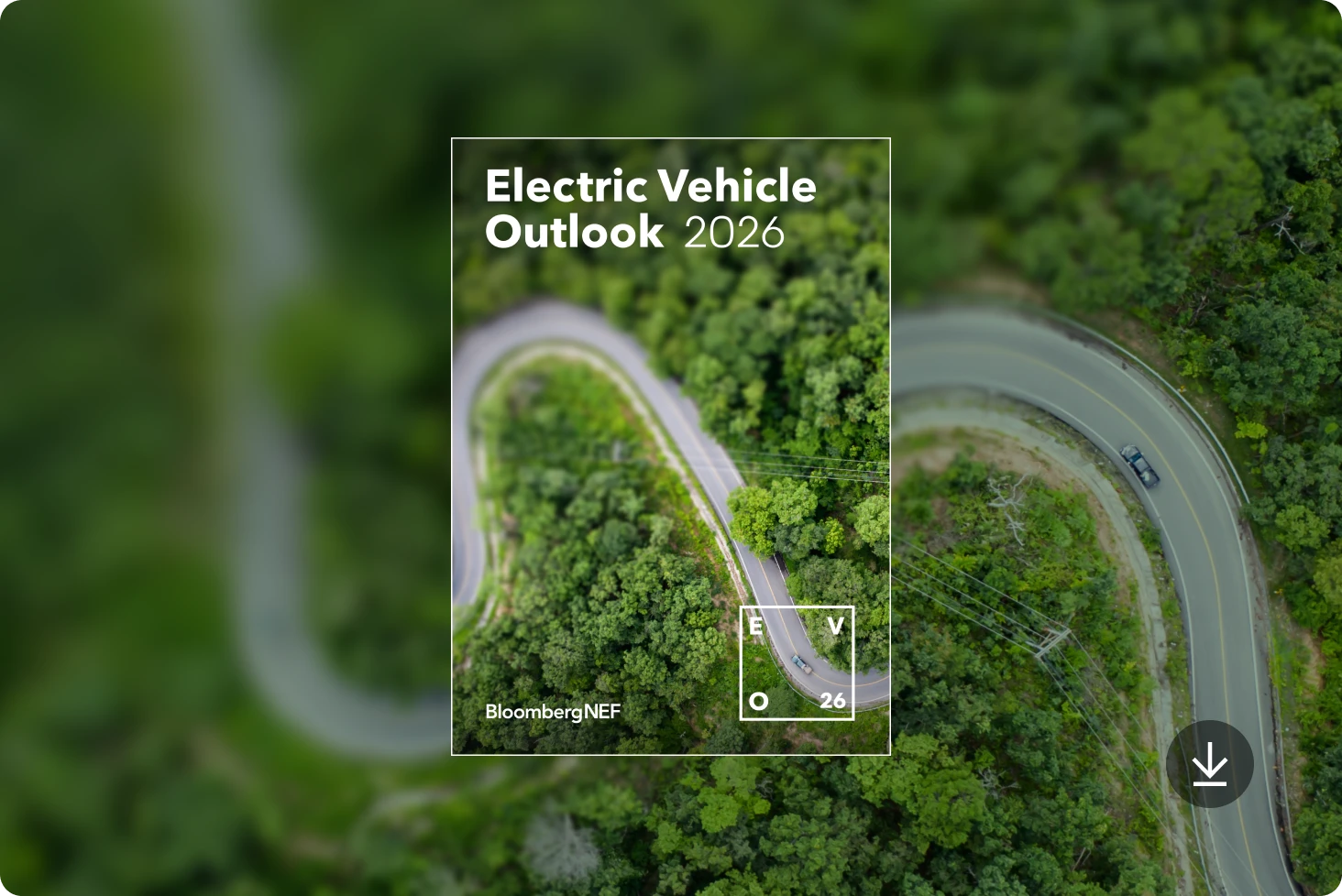
New features in this year’s outlook
- Expanded market coverage: Mexico and Spain join our core list of markets that also includes the US (with a breakout for California), China, Japan, India, Canada, South Korea, Australia, Germany, UK, France, Italy, Brazil, the Nordics, and Southeast Asia.
- New modeling for plug-in hybrids, more granular segment analysis of battery-electric vehicle upfront pricing, regional battery pricing and added detail on total-cost of ownership modelling that all impact the outlook for EV adoption.
- Updated battery chemistry outlook across cathode, anode and electrolyte components based on the latest technology and market developments. Including new outlooks for natural and synthetic graphite. .
- Analysis on the impact of Iran war.
- Read on for a high-level preview or download the EVO 2026 Executive Summary.
All data presented in the report are made available to clients via web tools, data viewers and as a downloadable excel file.
2026 and the years ahead
The transition to electric vehicles is uneven, with varying rates of adoption across vehicle types and markets. Buses and two- and three-wheelers are leading the way, closing in on 50% market share. Electric vans, trucks and passenger cars are still on a growth trajectory that could see them surpassing a 50% share of global sales by 2035.
Electric vehicle share of sales
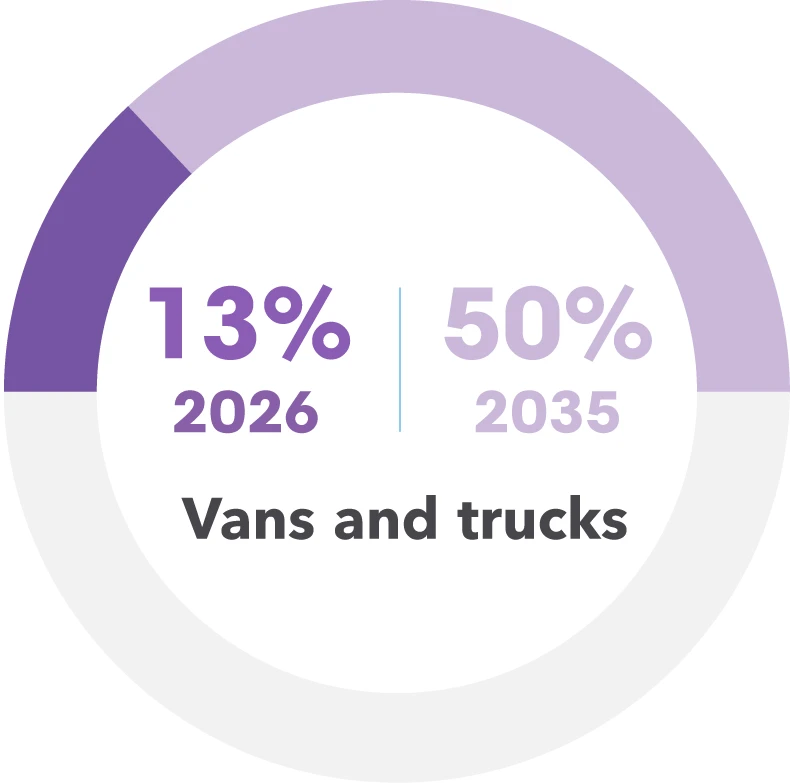
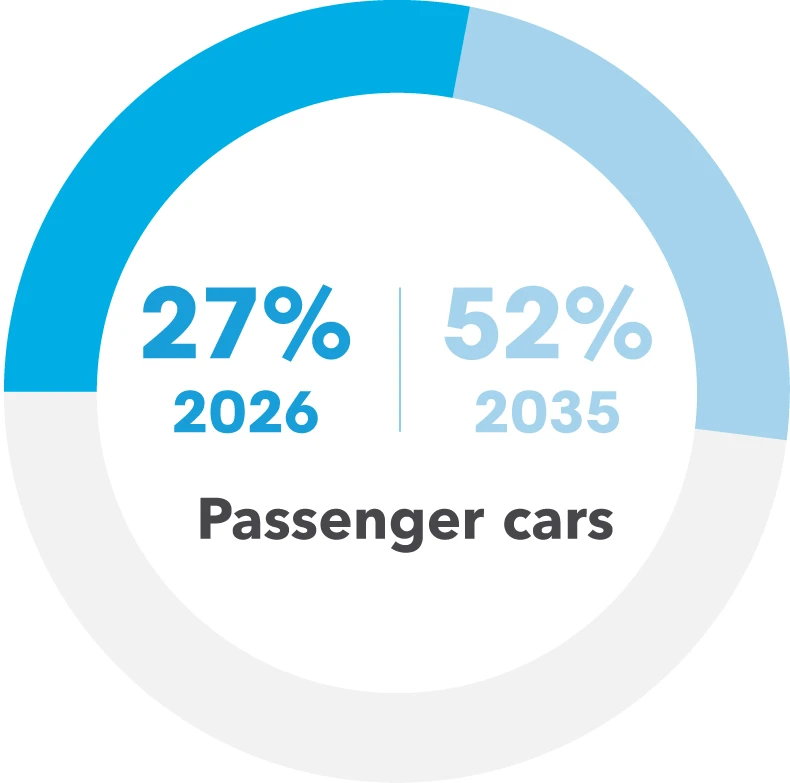
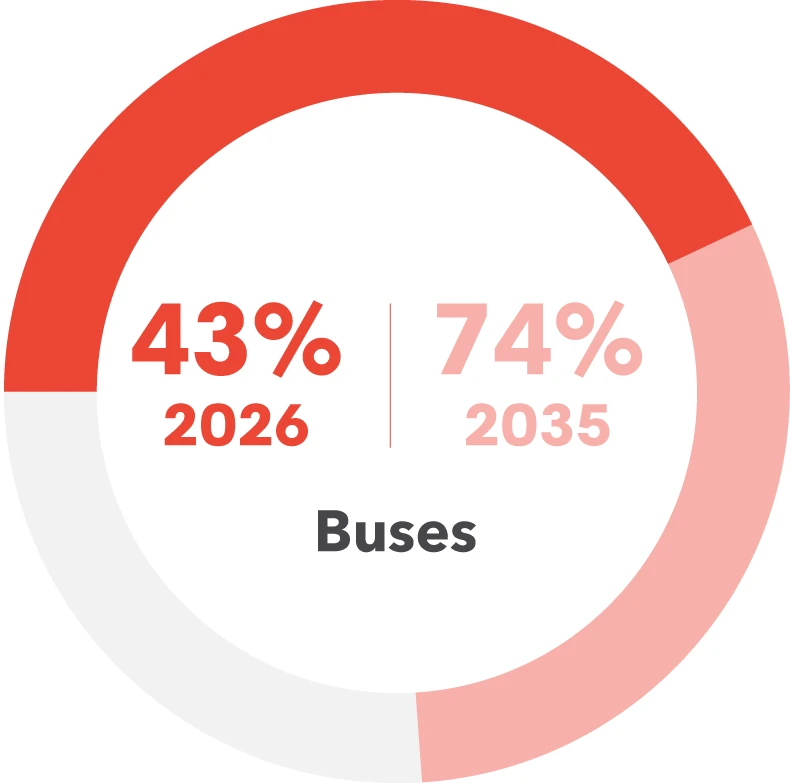
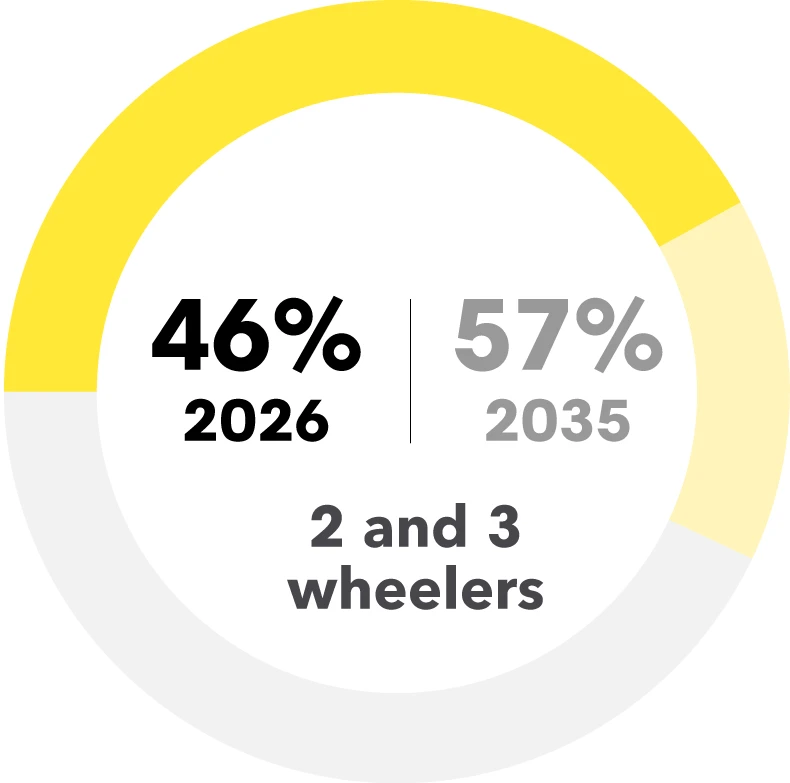
Note: All figures are BloombergNEF’s outlook for 2026 and 2035. Percentages are the electric vehicle share of new sales in each segment. Includes battery electric and plug-in hybrid vehicles.
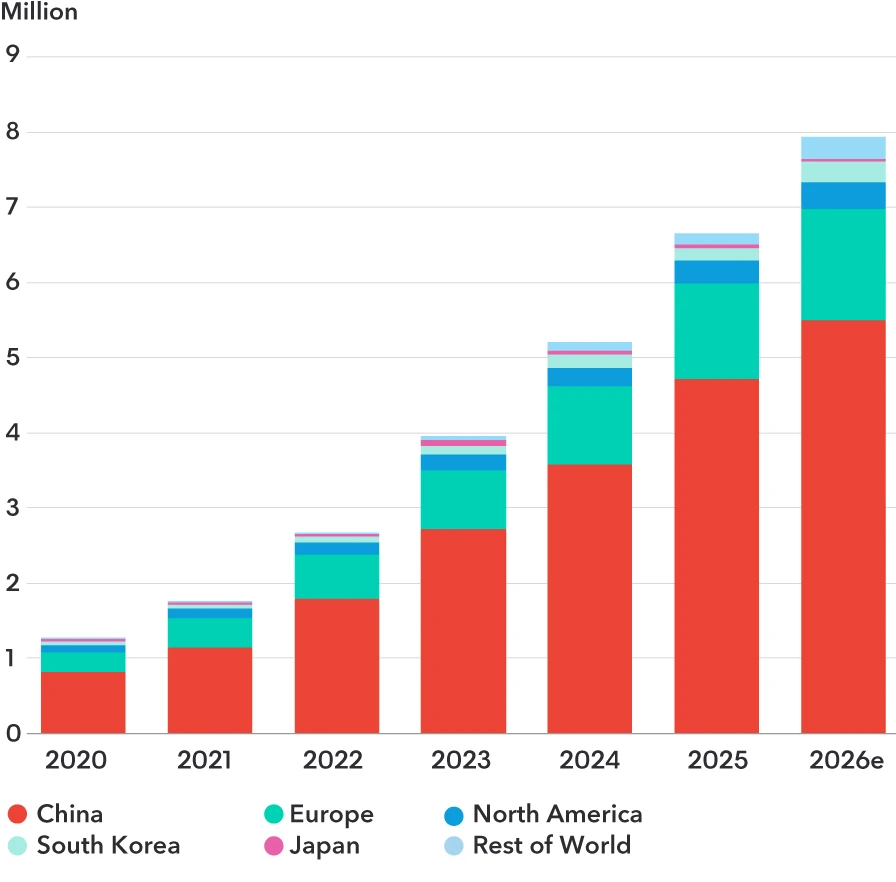
Passenger EV sales continue to rise in 2026, reaching 23.3 million globally, despite regulatory changes putting markets on divergent trajectories. This represents an 11% rise from 2025 and is underpinned by China, which continues to account for the bulk of global EV sales, alongside rising momentum in Europe, Southeast Asia, India, Mexico and Brazil.
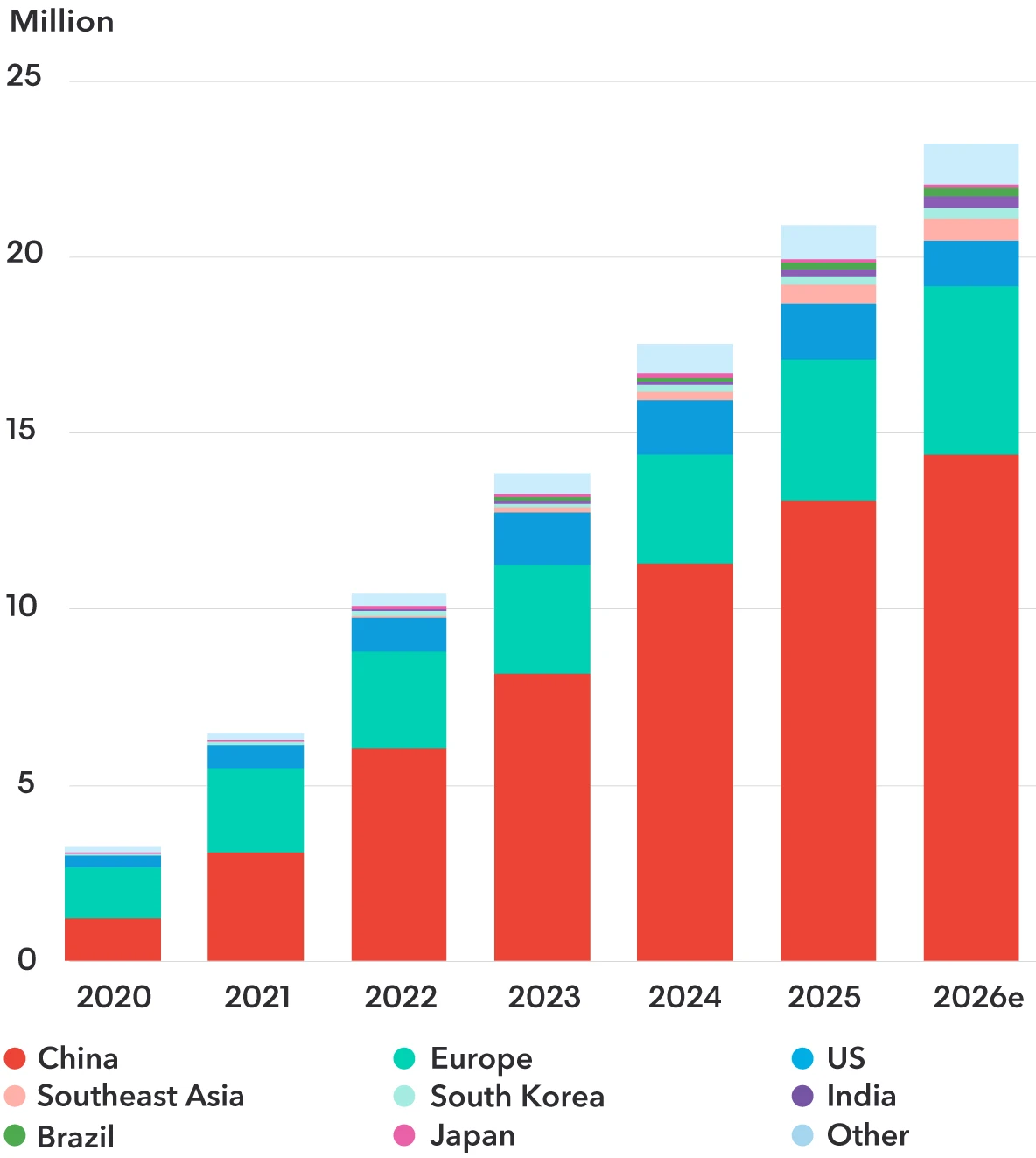
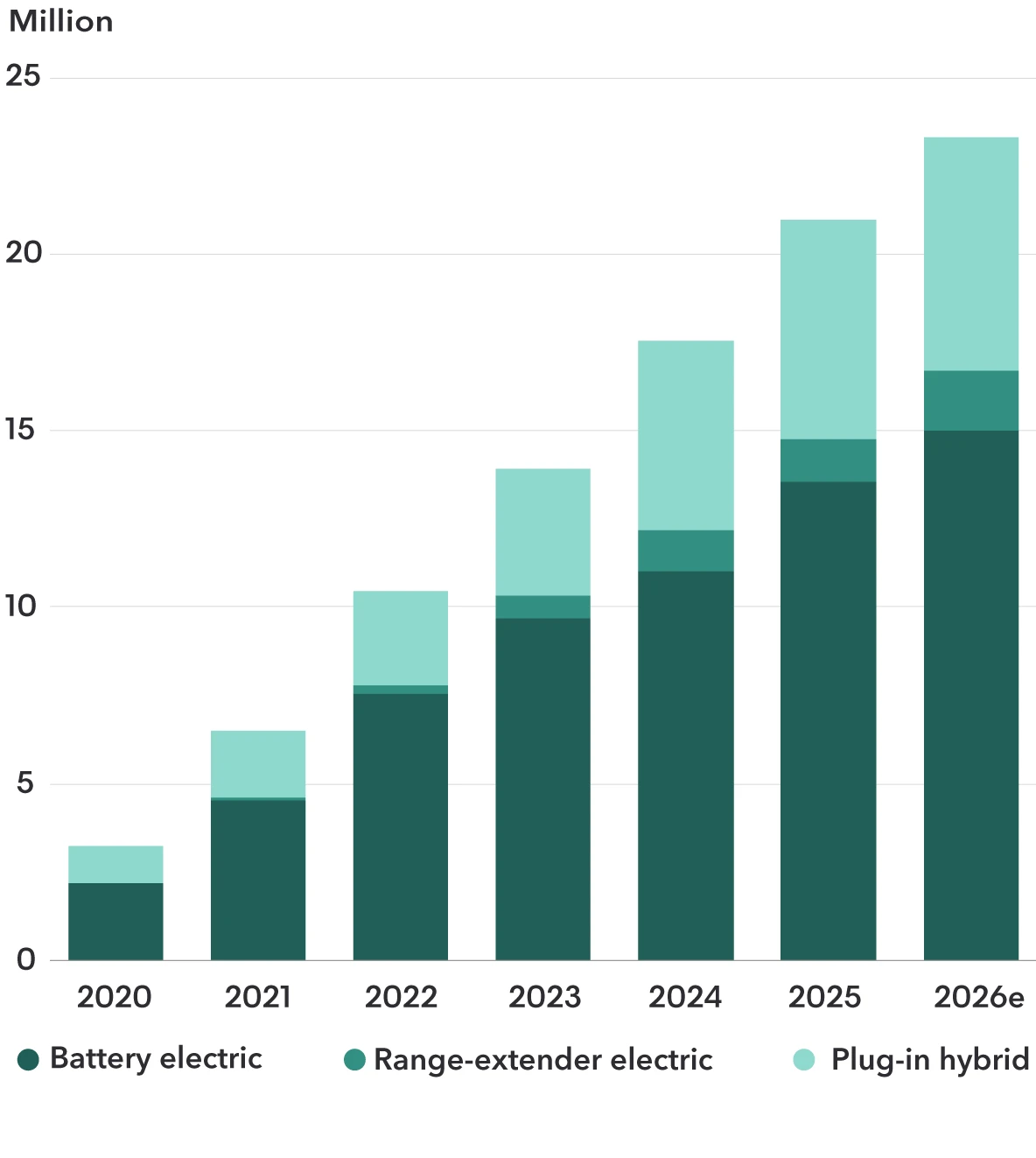
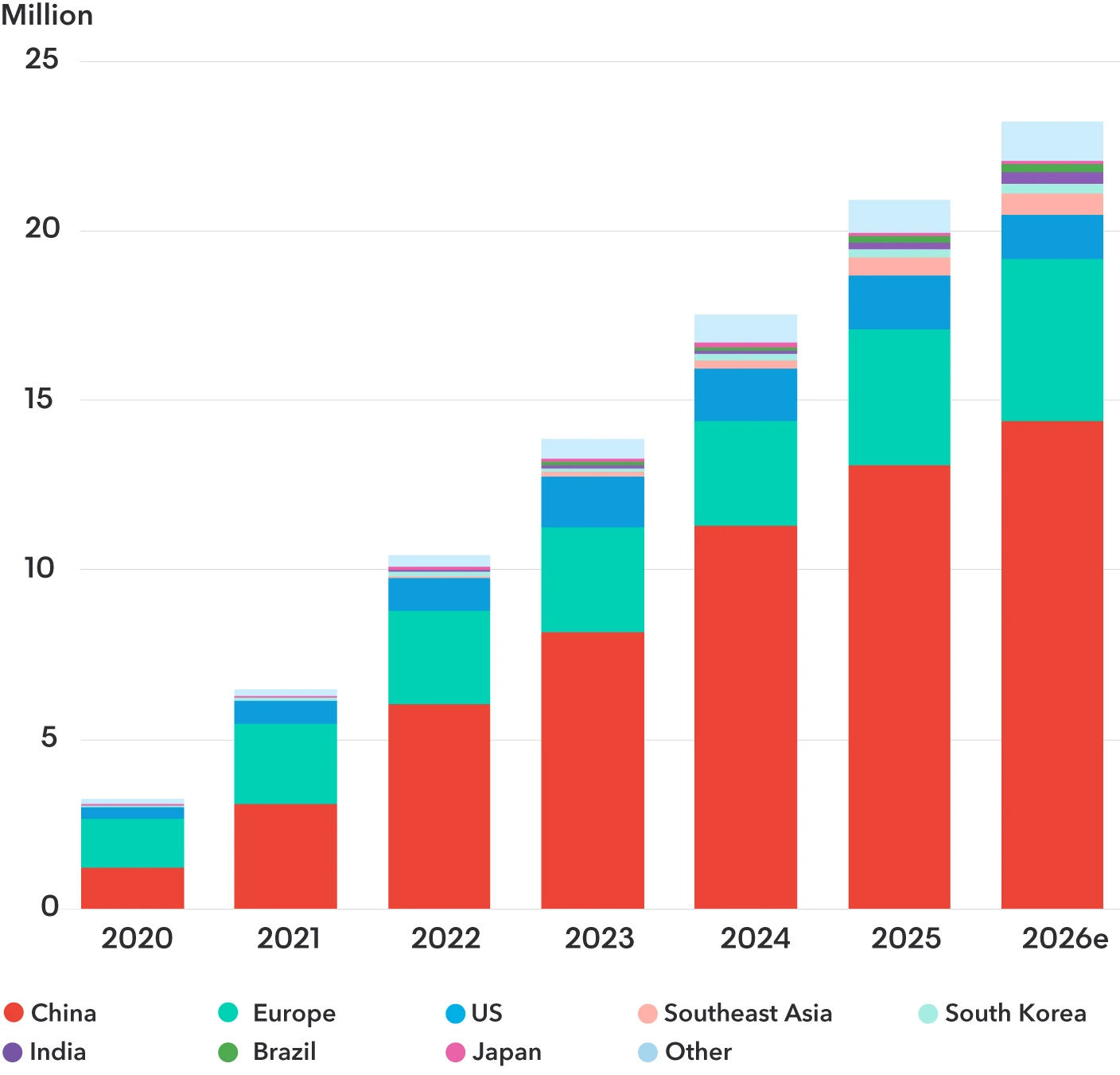
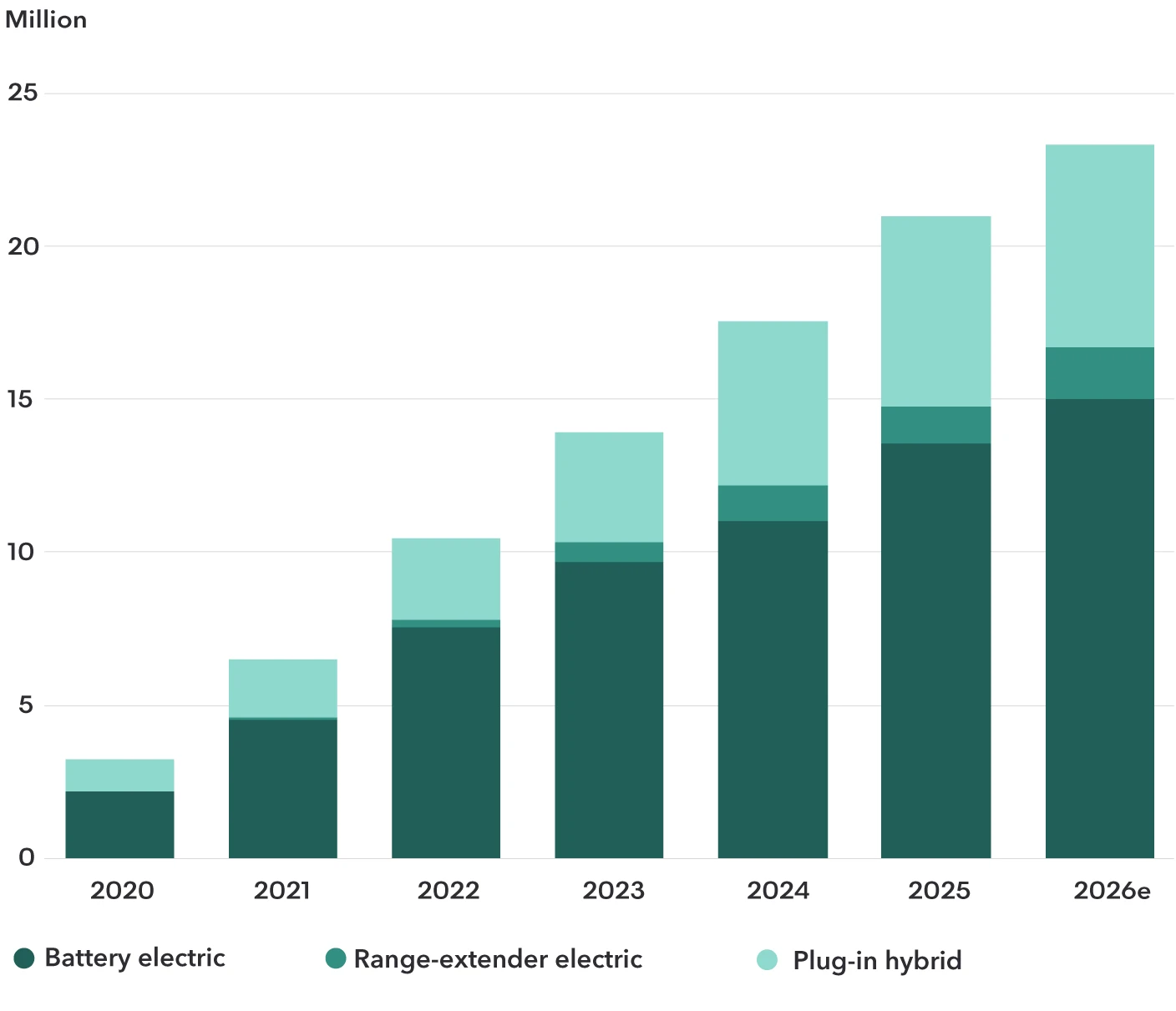
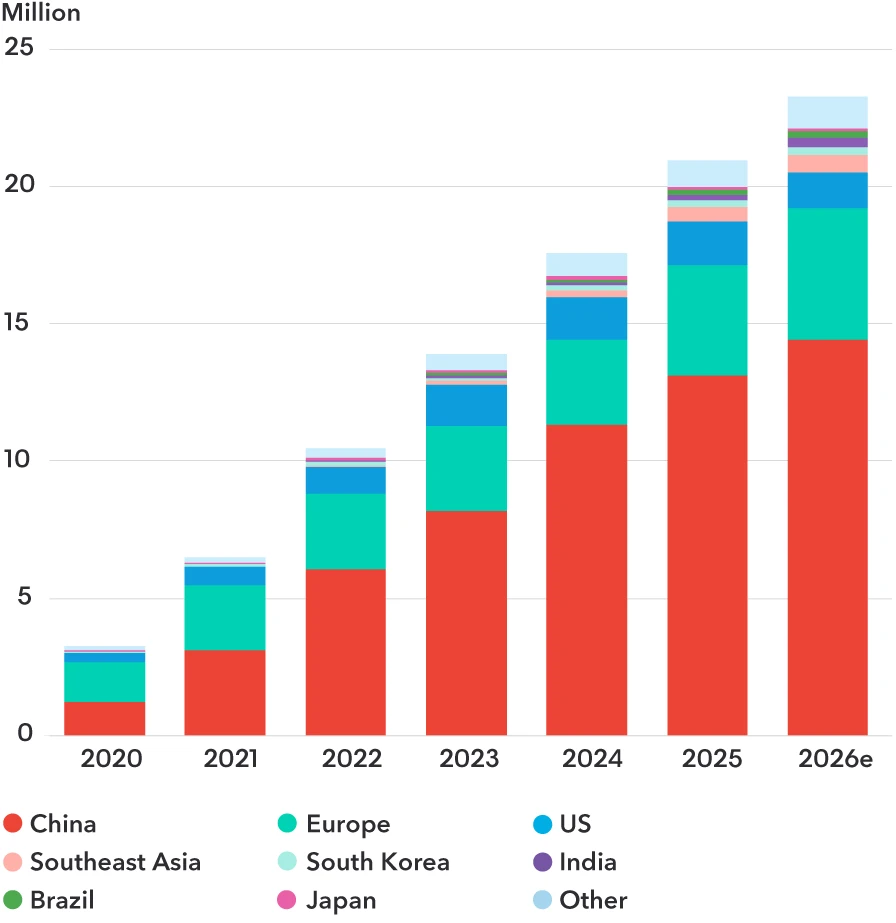
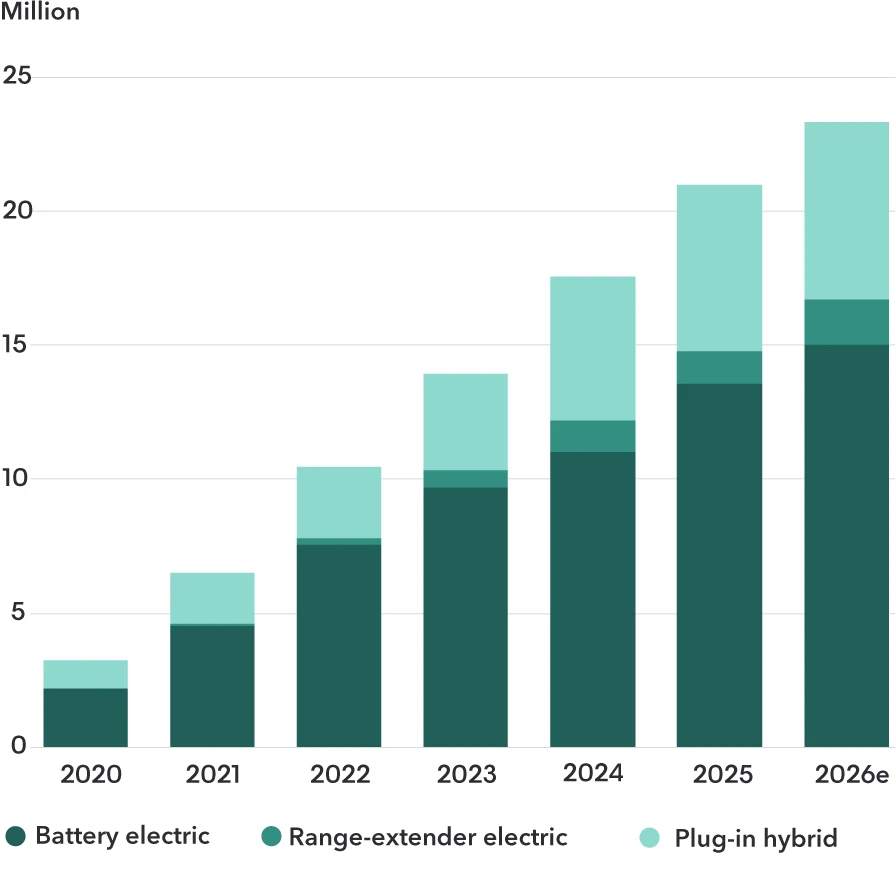
Source: BloombergNEF, MarkLines, Jato Dynamics
Note: Includes highway-capable passenger EVs. Range-extender electric vehicles are a variant of plug-in hybrids with an on-board power generator that charges the battery. 2026e is BNEF’s forecast for the year.
Lithium-ion battery demand
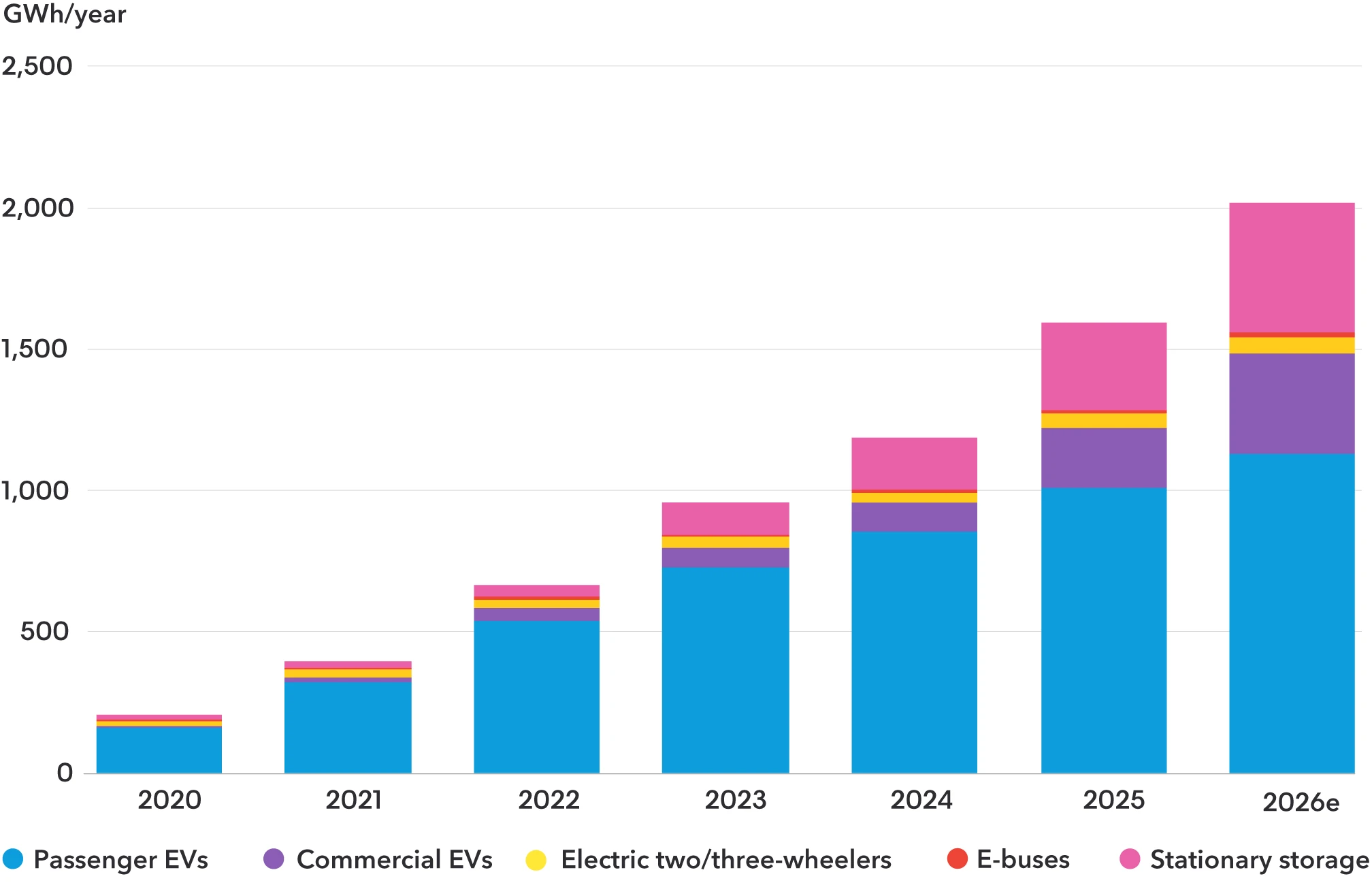
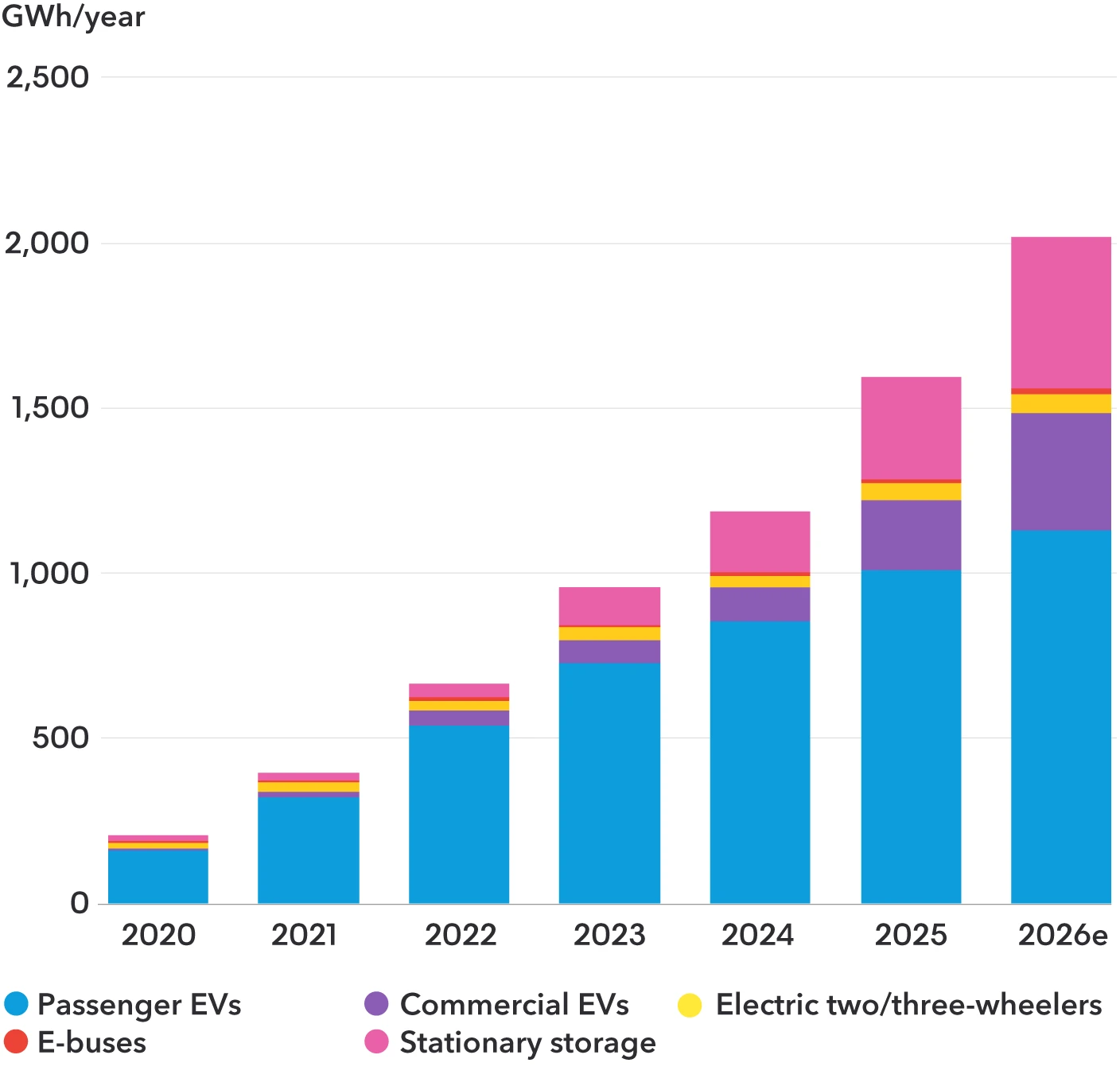
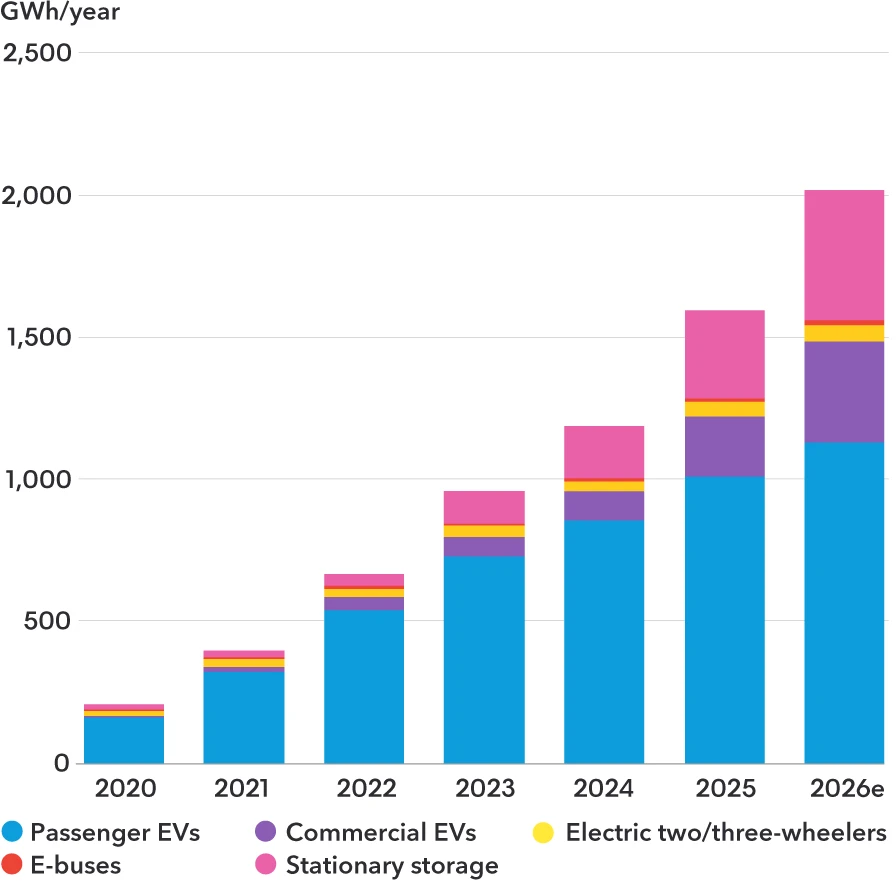
Road transport remains the largest source of battery demand, but growth is slower than previously expected. This is mainly due to weakening passenger EV sales in some major markets as well as the growing share of plug-in hybrids and range-extender EVs, which use smaller batteries than battery-electric vehicles. Stronger demand from stationary storage, however, offsets this decline.
Major automakers, led by General Motors, Ford and Volkswagen, are expanding their battery businesses beyond electric vehicles into large-scale energy storage. New cell manufacturing capacity is increasingly directed toward energy storage systems, especially in the US.
Annual lithium-ion battery demand by application
EV charging infrastructure
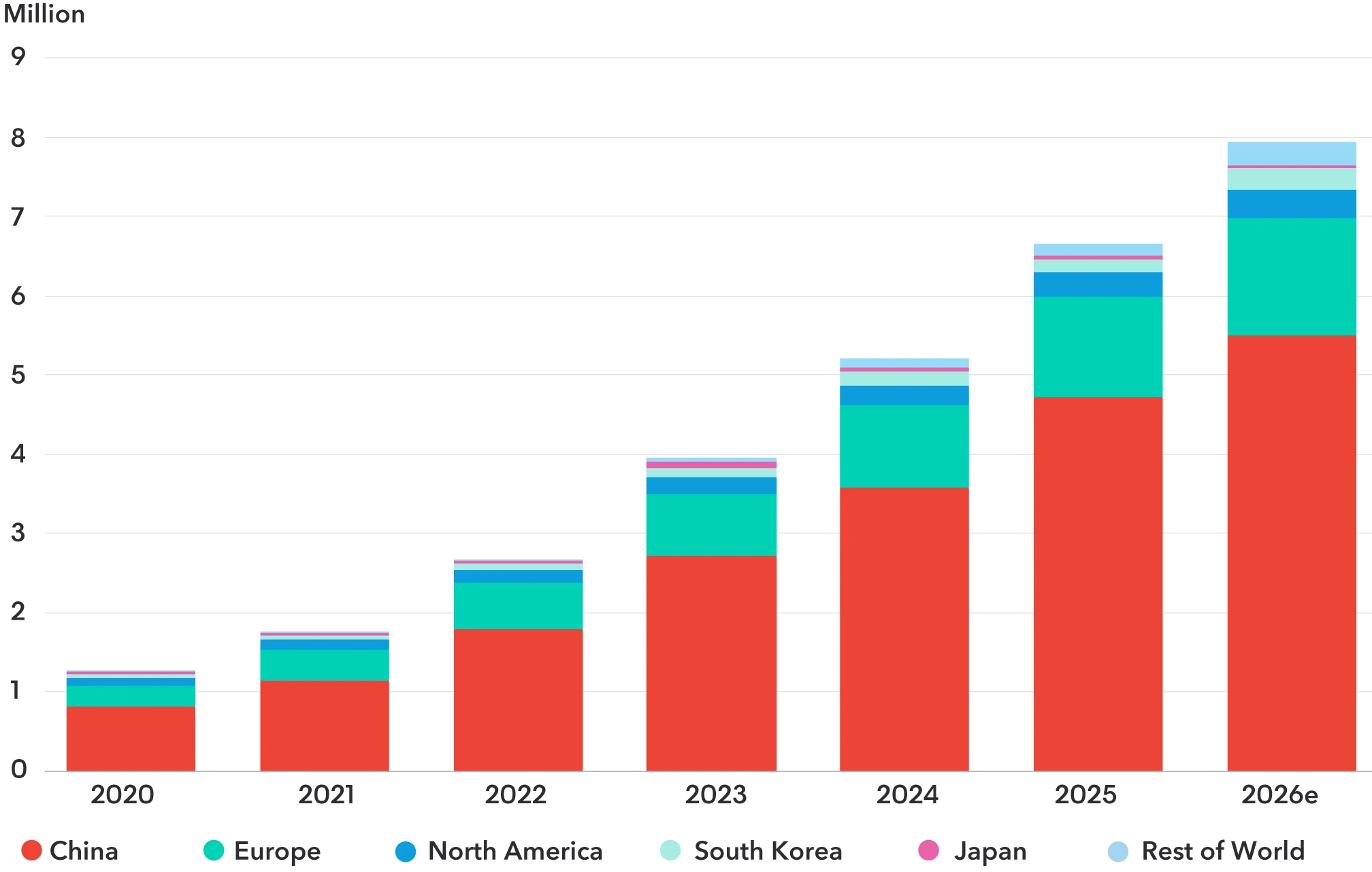
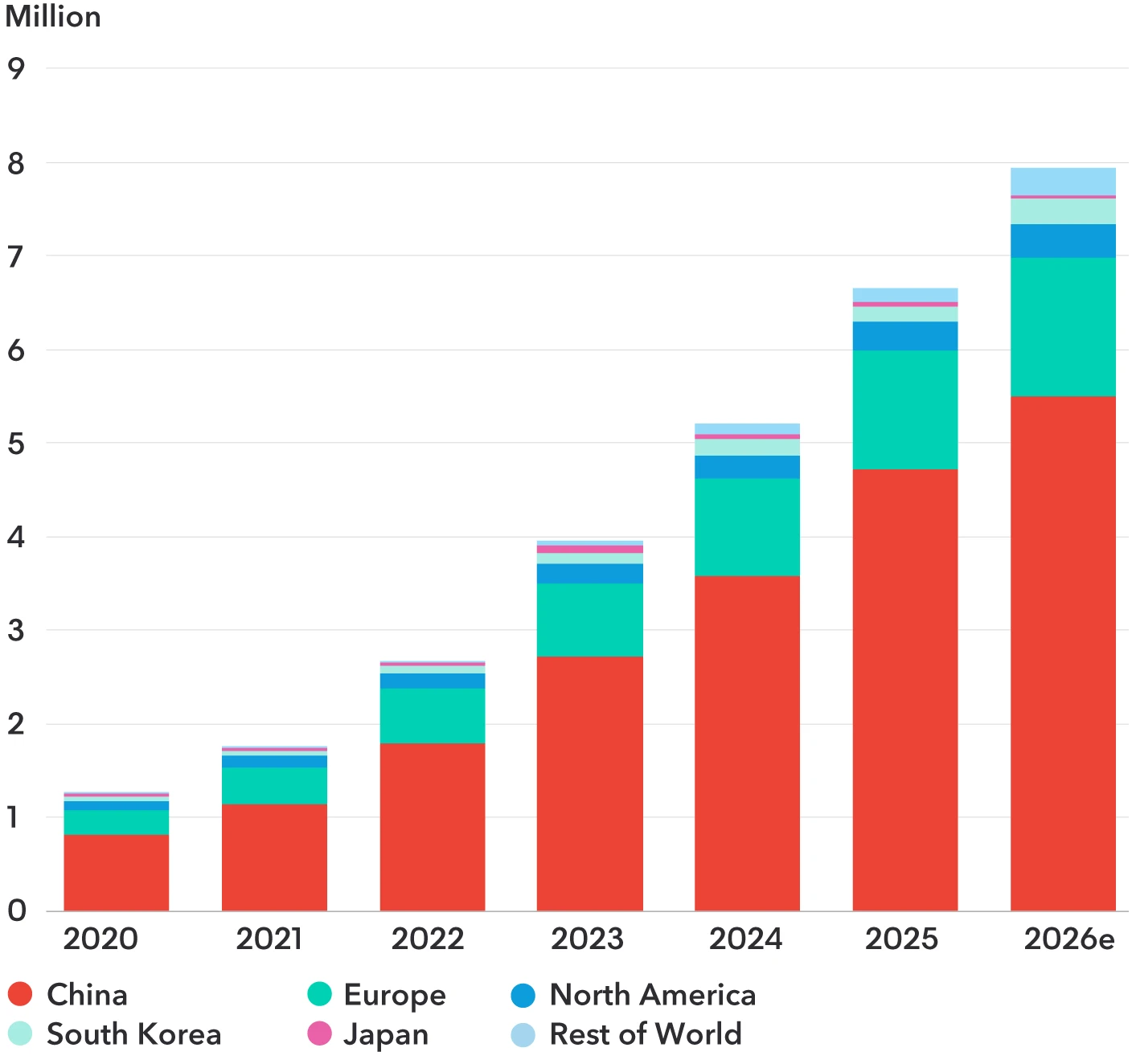
Public charging networks for electric vehicles grew 28% in 2025 from the year before, pushing the number of connectors to 6.7 million. The industry is on track for slower growth in 2026, though new installations are set to increase by 19%.
While China continues to account for the largest share of new charger installations, other markets are growing quickly. In 2025, the number of installed ultra-fast charging connectors in both Europe and the US grew almost 50% from the year prior.
Cumulative global public charging connectors
Key dates
Road transport oil demand peak
The number of robotaxis on the road surpasses 1 million vehicles
Electric passenger vehicles surpass 50% of sales
Over two-thirds of car, van and truck sales are electric
Electric passenger vehicles on the road outnumber internal combustion engine vehicles
645 million tailpipe emitting passenger vehicles still on the road
Get the free Executive Summary
Enter your details to download the executive summary and find out more on the implications of EV adoption for energy markets, raw materials, emissions, charging infrastructure and more.
BNEF clients can access the full report, including the breakdown by segment, technology and region, as well as the underlying Excel data and previous editions.
Authors

Aleksandra O’Donovan
Co-lead author

Andrew Grant
Co-lead author

Dr. Nikolas Soulopoulos
Commercial vehicles and freight

Ryan Fisher
Charging infrastructure and electricity demand

Jinghong Lyu
Modeling and autonomous vehicles

Siyi Mi
Two and three wheelers

Siong-Hu Wong
Two and three wheelers

Maynie Yang
Commercial vehicles and buses

Huiling Zhou
Vehicle economics

Sada Wachche
Electric vehicles

Shananthan Kalaichelvan
Electric vehicles

Claudio Lubis
Oil

Luxi Hong
Oil

Madeleine Brolly
Charging infrastructure

Ash Wang
Charging infrastructure

Evelina Stoikou
Batteries

Dr. Andy Leach
Batteries

Jiayan Shi
Batteries

Yayoi Sekine
Batteries

Dr. Kwasi Ampofo
Metals and mining

Peng Xu
Metals and mining

Komal Kareer
India and Southeast Asia

Leonard Quong
Australia

Vinicius Nunes
Brazil

Rafael Rabioglio
Latin America

Stephan Mothe
Mexico

Takehiro Kawahara
Japan and South Korea

Taishin Noble
Japan and South Korea

Antoine Vagneur-Jones
Trade and supply chains

Matthew Hales
Trade and supply chains

Nick Wang
Electric vehicles

Andrew Logan
Editorial

Dr. Ali Izadi-Najafabadi
Head of Global Transition Analysis

Colin McKerracher
Head of Clean Transport and Storage research