By Vandana Gombar, Senior Editor, BloombergNEF
Clean power use is rising and will emerge stronger from the Iran war as surging prices of gas and oil and disrupted fossil fuel supplies impose severe strain on economies. The world could double down on low-carbon energy, according to one view. Batteries, or storage, will be a big part of the shift, current trends show. So will corporations, which are increasing renewable energy consumption. Power-thirsty hyperscalers for the first time made up about half of the green power purchases last year. Here are three things to watch.
1. Solar-plus-storage gains appeal in Saudi Arabia, a fossil fuel powerhouse
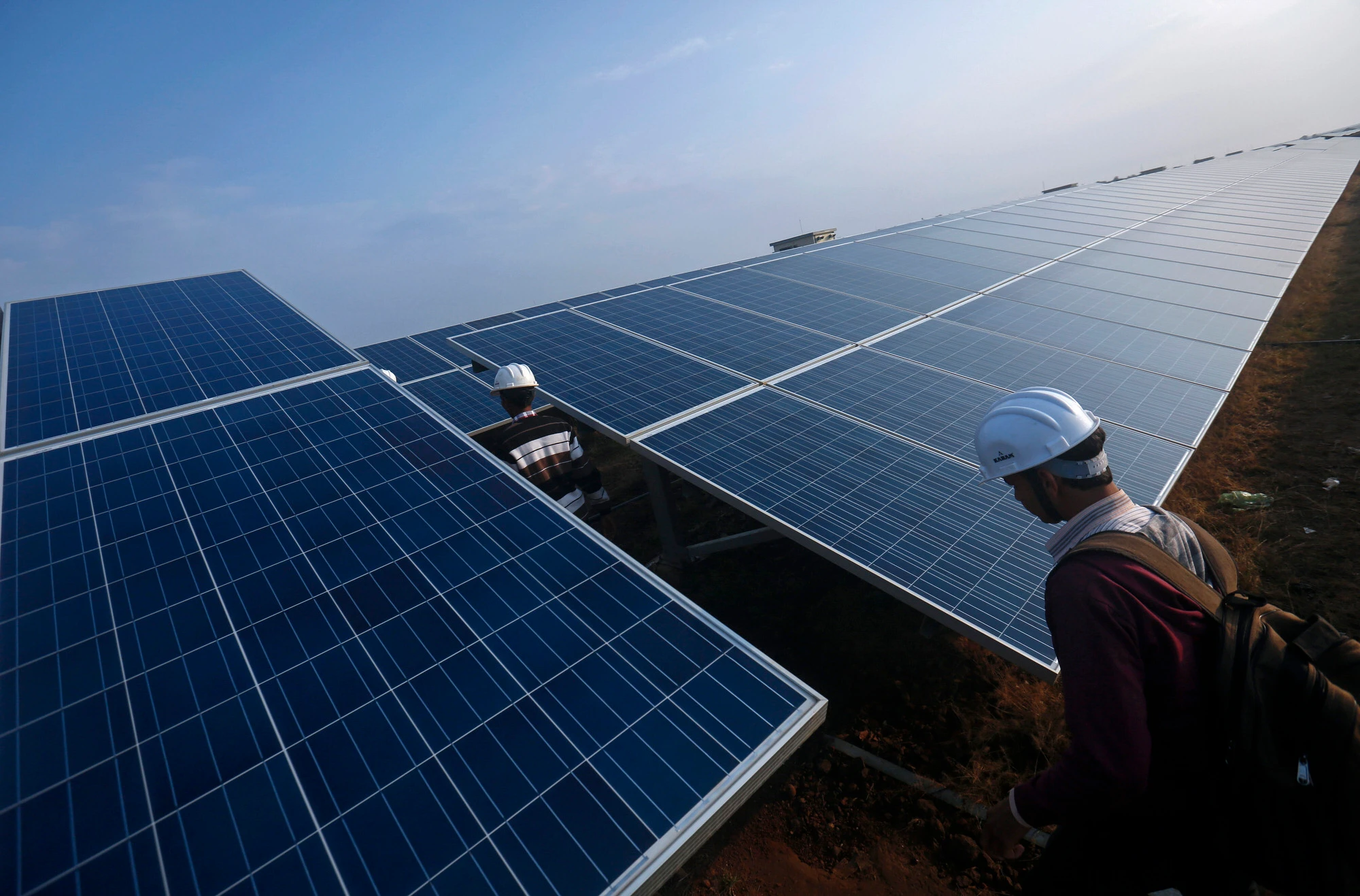
Solar PV-plus-storage systems in Saudi Arabia can supply nearly uninterrupted power at an affordable cost throughout the day.
For up to 65% of the year, these systems can meet demand at a lower cost than a combined cycle gas turbine, Abdullah Alkattan, BloombergNEF’s Middle East analyst wrote in the latest edition of Signposts. That means the cost of supply would be below $45 per megawatt-hour (levelized cost).
Higher reliance on solar-plus-storage would add to average costs, but not a lot. Almost 100% of power demand could be met at $70 per megawatt-hour. Favorable power economics are a key part of the kingdom’s push to become a data center hub.
2. Hyperscalers are buying ever more clean energy
Big tech companies have huge appetite for clean power. Technology giants Meta, Amazon, Google and Microsoft accounted for about half the 56 gigawatts of clean power purchase deals signed in 2025. Most of this activity was in the US, where the agreements made up 76% of the market’s total deals of about 30 gigawatts.
“Demand from corporations remains an important driver for clean energy deployment, especially for emerging clean, firm power generation technologies like enhanced geothermal, nuclear or co-located solar and storage projects,” said Nayel Brihi, BNEF’s corporate energy analyst.
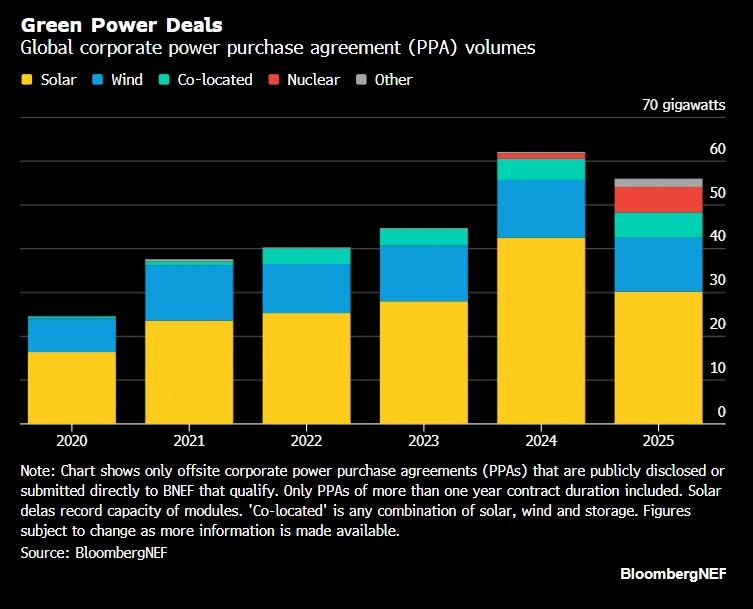
Materials companies like Egypt Aluminium and Rio Tinto also featured among the top 10 buyers of clean power in 2025. Activity slowed in mature markets like Germany and Spain amid rising power market volatility and policy uncertainty.
3. Power supply from Australia’s batteries up
Large utility-scale batteries are proliferating in Australia. A record 3.1 gigawatts/7.7 gigawatt-hours of utility-scale batteries started operating across the country in 2025, a fivefold increase over the capacity added in 2024. That is changing the dynamics of the power market.
“These installations are steadily eating the most valuable run hours of costlier gas plants, lowering evening power prices and tempering power market volatility,” said Sahaj Sood, BNEF’s Australia analyst.
Discharge from utility-scale batteries supplied 4.4% of average evening demand (7pm) in the National Electricity Market in the fourth quarter of 2025. This was up from just 0.2% in the fourth quarter of 2021.
BNEF clients can access Signposts, a quarterly highlighting trends in the energy transition.
Related Content