Importing emissions-intensive products into the European Union just got a lot more expensive.
The EU’s carbon market, known as the Emissions Trading System (ETS), is already forcing domestic producers to pay for the carbon they emit.
That could put them at a disadvantage compared with producers outside the bloc. In an effort to equalize this footing, the bloc has instated the Carbon Border Adjustment Mechanism, or CBAM, under which importers must purchase certificates reflecting the embedded emissions of their products.
The mechanism covers selected goods from six emissions-intensive sectors: iron and steel, aluminum, cement, fertilizers, hydrogen and electricity. Importers will face a phased exposure to these costs, aligned with the gradual reduction of free allowances for domestic producers under the ETS.
The policy entered its pricing phase on Jan. 1, 2026. But it remains unclear just how much many importers will need to pay.
Emissions intensity remains the key driver of CBAM costs
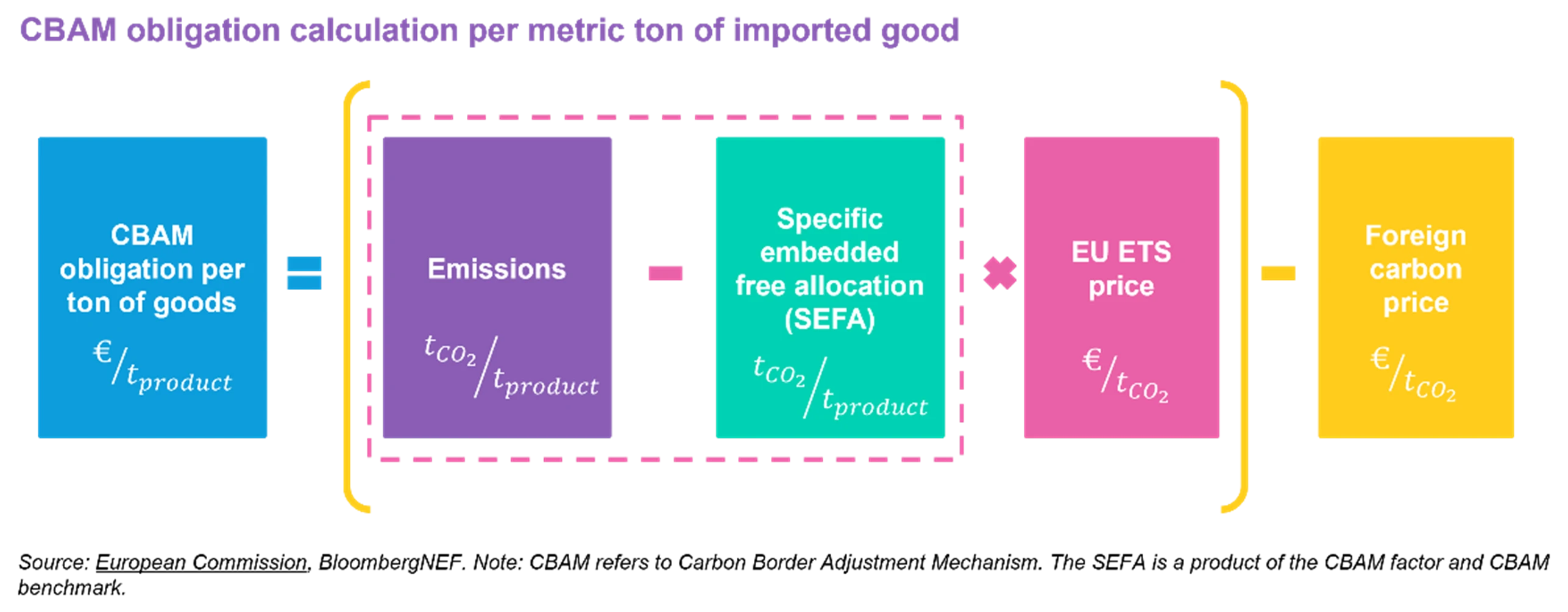
CBAM obligations depend on multiple factors, including embedded emissions of products, market of origin, EU ETS prices and production processes. Among these, emissions values – whether based on European Commission data or verified figures – are likely to be the most significant driver of cost differences across suppliers.
The figure below shows a simplified version of the equation that underpins obligation calculations.
Importers unable to verify their own emissions data will be charged according to default values provided by the European Commission. These could prove to be punitively high – as much as 1.3 times the current import value for goods like cement and clinker. The idea is to encourage companies to report the actual emissions of their products, but it could create a new hierarchy for competitiveness, where verified low-carbon producers could displace unverified or highly polluting suppliers.
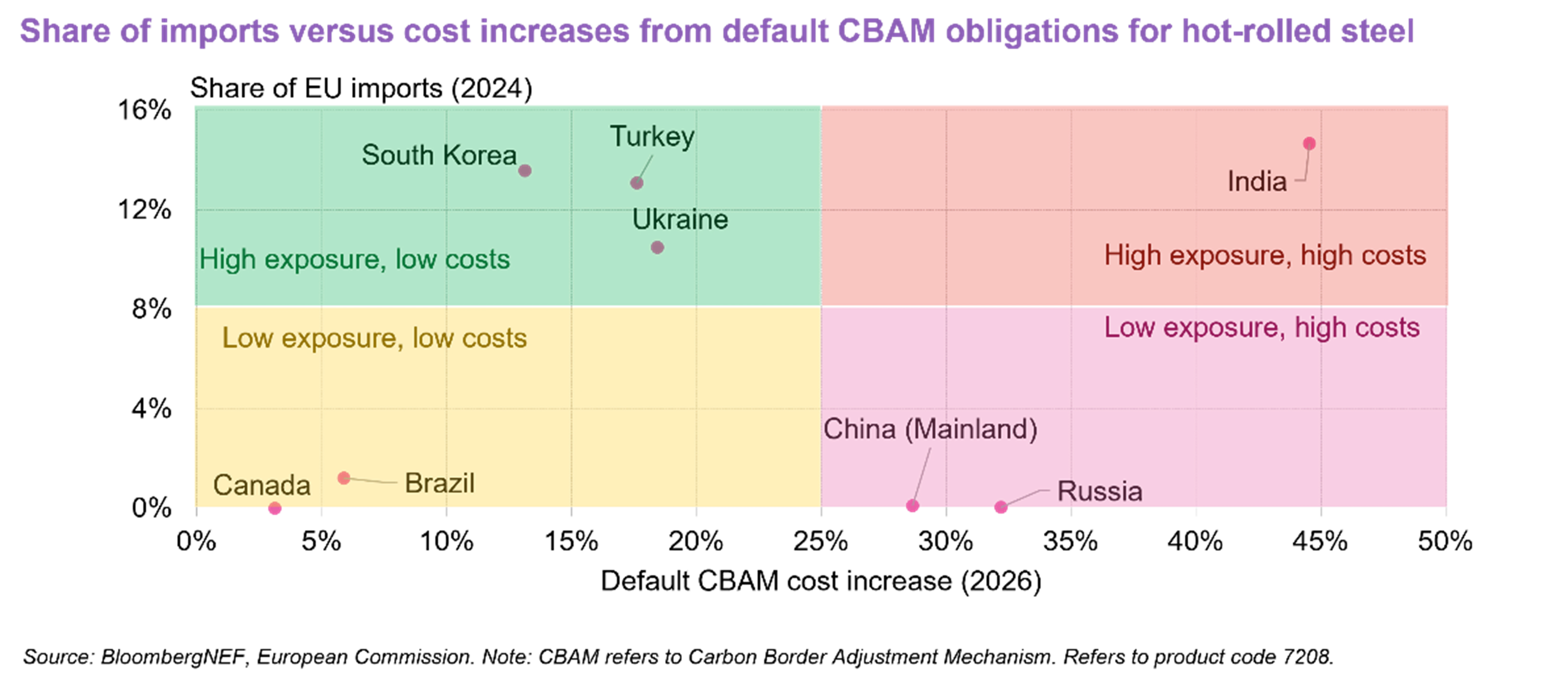
Default obligations also have an uneven impact across markets.
For example, India supplied about 15% of the hot-rolled steel products imported into the EU in 2024 but faces one of the highest default obligations, with costs up to €293 ($343) per metric ton in 2026. By contrast, markets such as South Korea and Turkey face lower default costs but hold similar export shares.
Clients can use BloombergNEF’s EU CBAM Obligation Calculator (EUCBAM 1.0.2) to estimate potential costs across affected products and markets. This Excel-based tool enables users to compare outcomes by market, product, year and carbon pricing scenario.
The video below provides a brief overview of how to use the tool.
For more BNEF analysis on CBAM, clients can access:
Related Content