NEO 2026 Executive Summary Preview
The route to 2035 and beyond
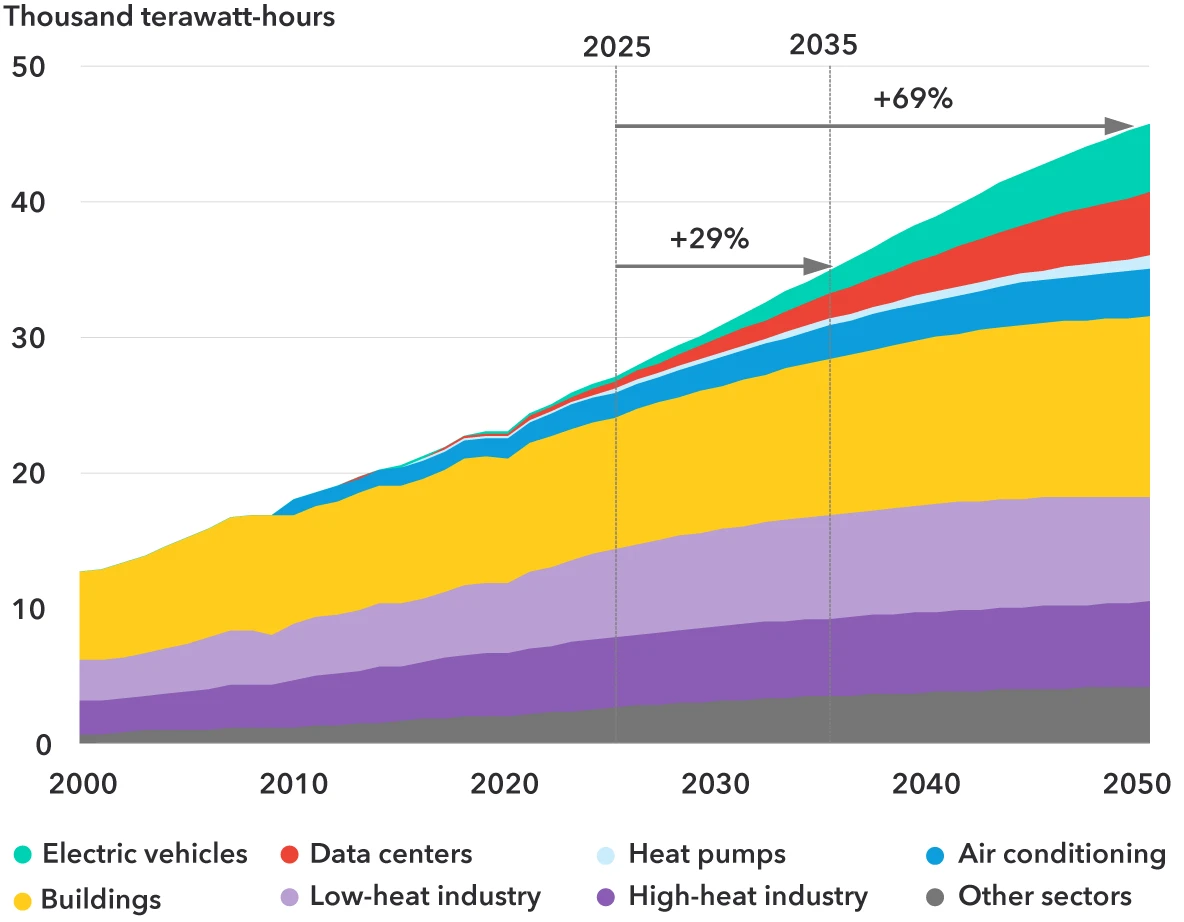
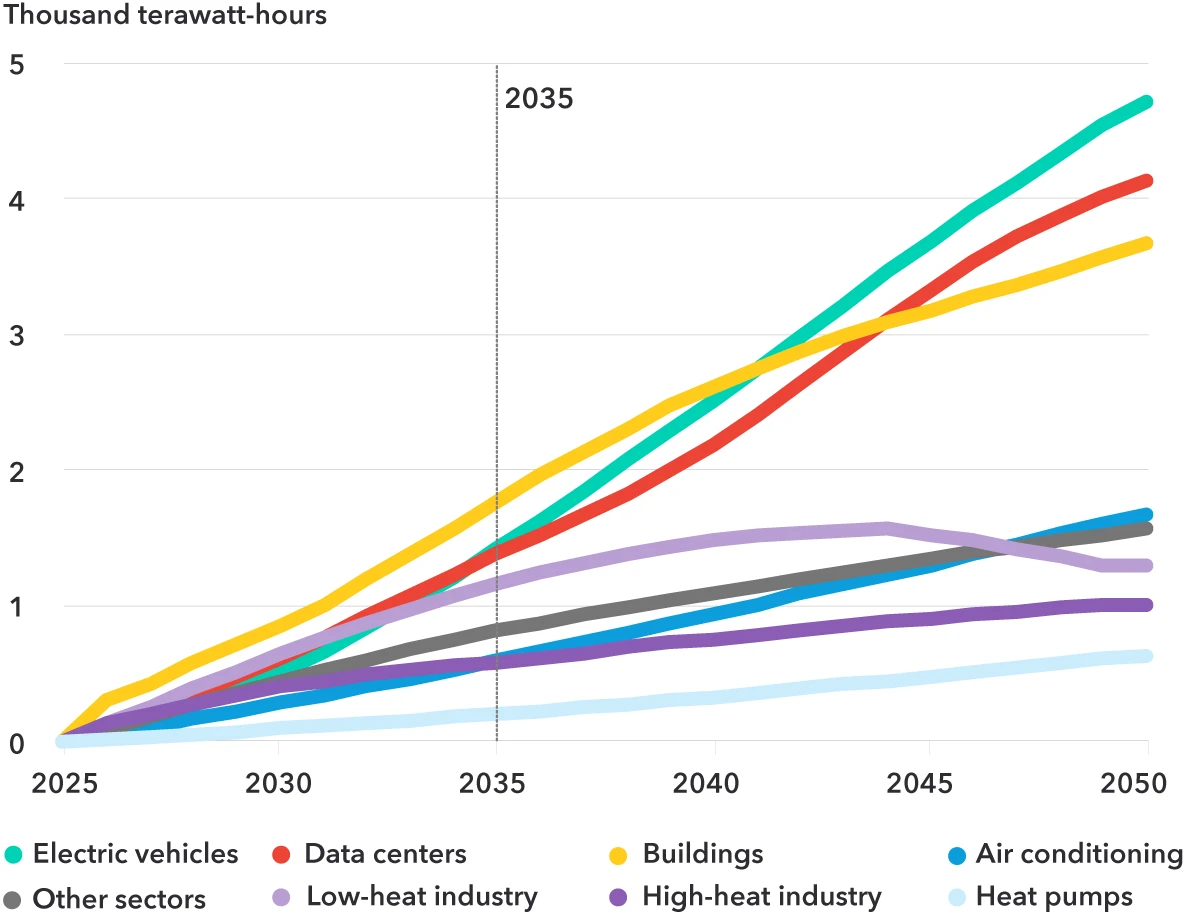
The 2026 edition presents a new base-case scenario and a major update to our well-below-2C climate scenario. Against a backdrop of geopolitical tension and rising electricity demand, this year’s outlook explores how the global energy system may evolve as countries seek to balance resilience, affordability and decarbonization. The report examines how renewables, batteries, electric vehicles, nuclear and next-generation technologies are reshaping energy globally and within key markets.
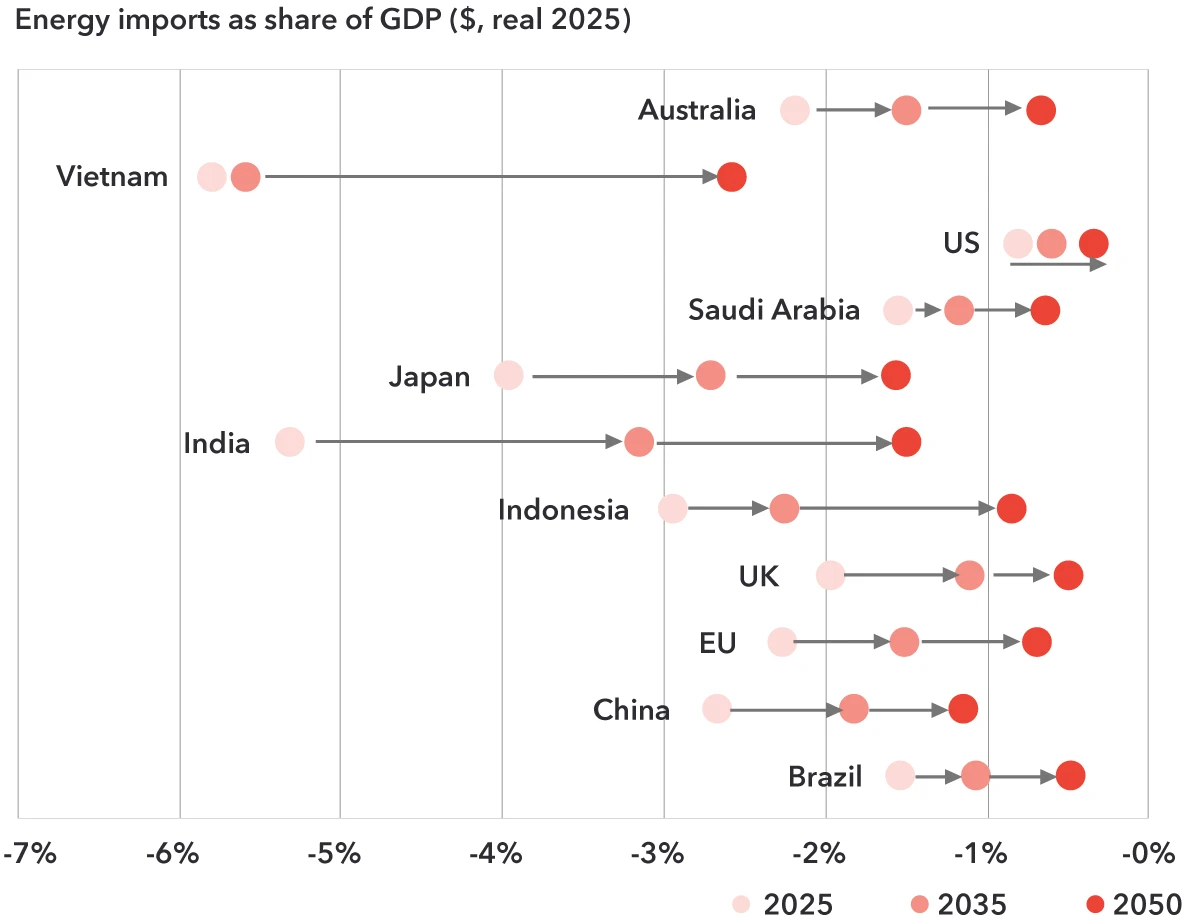
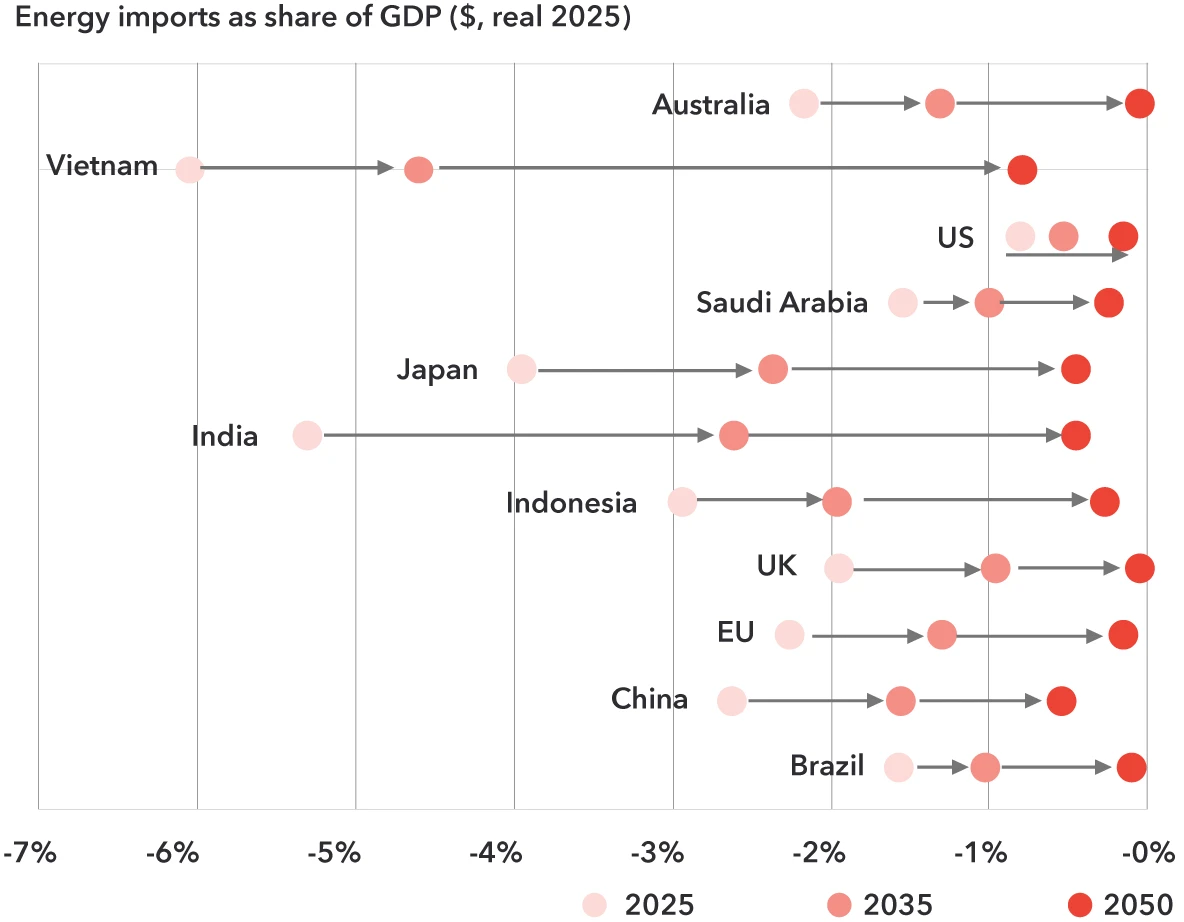
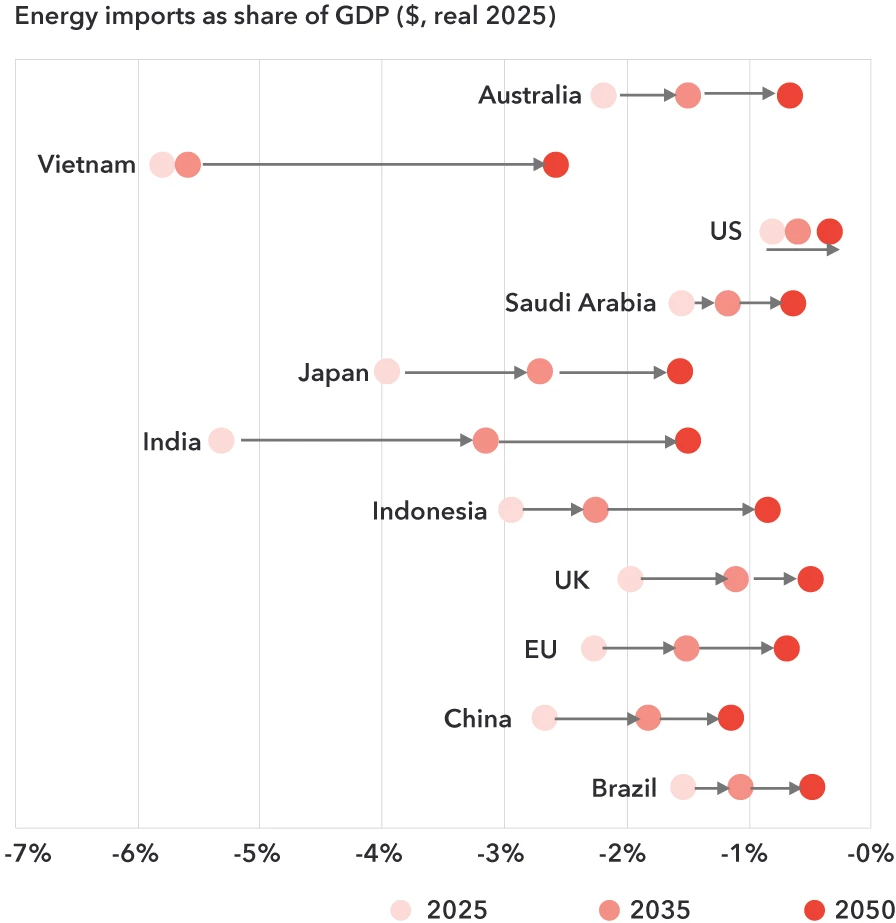
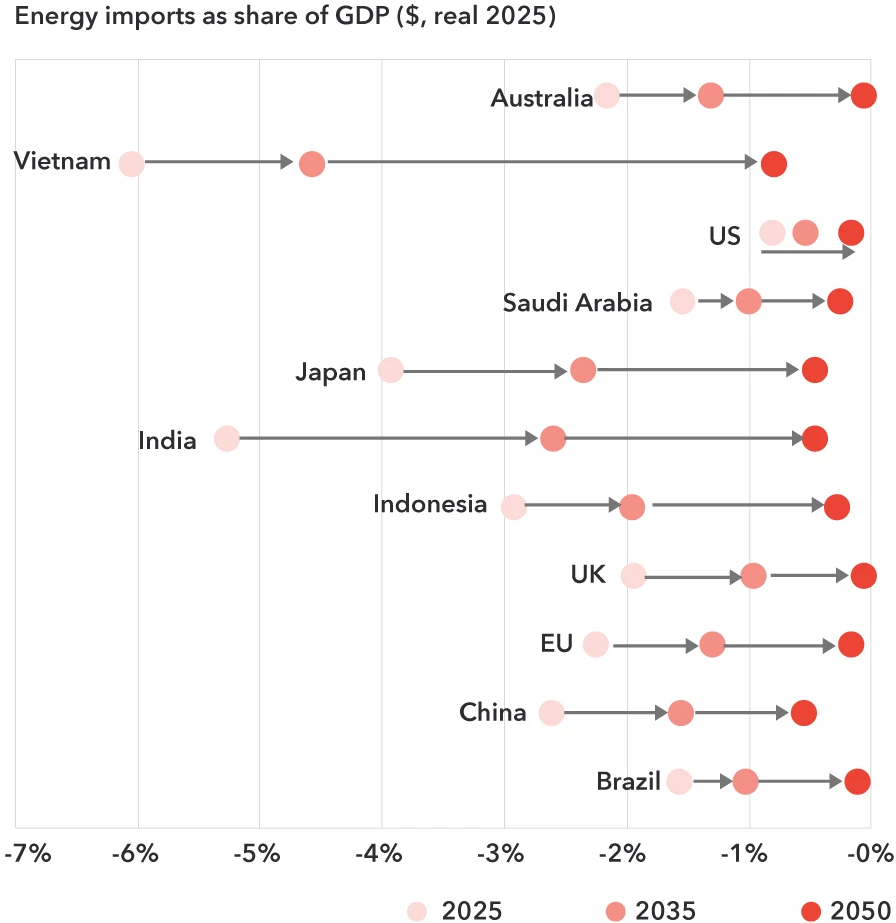
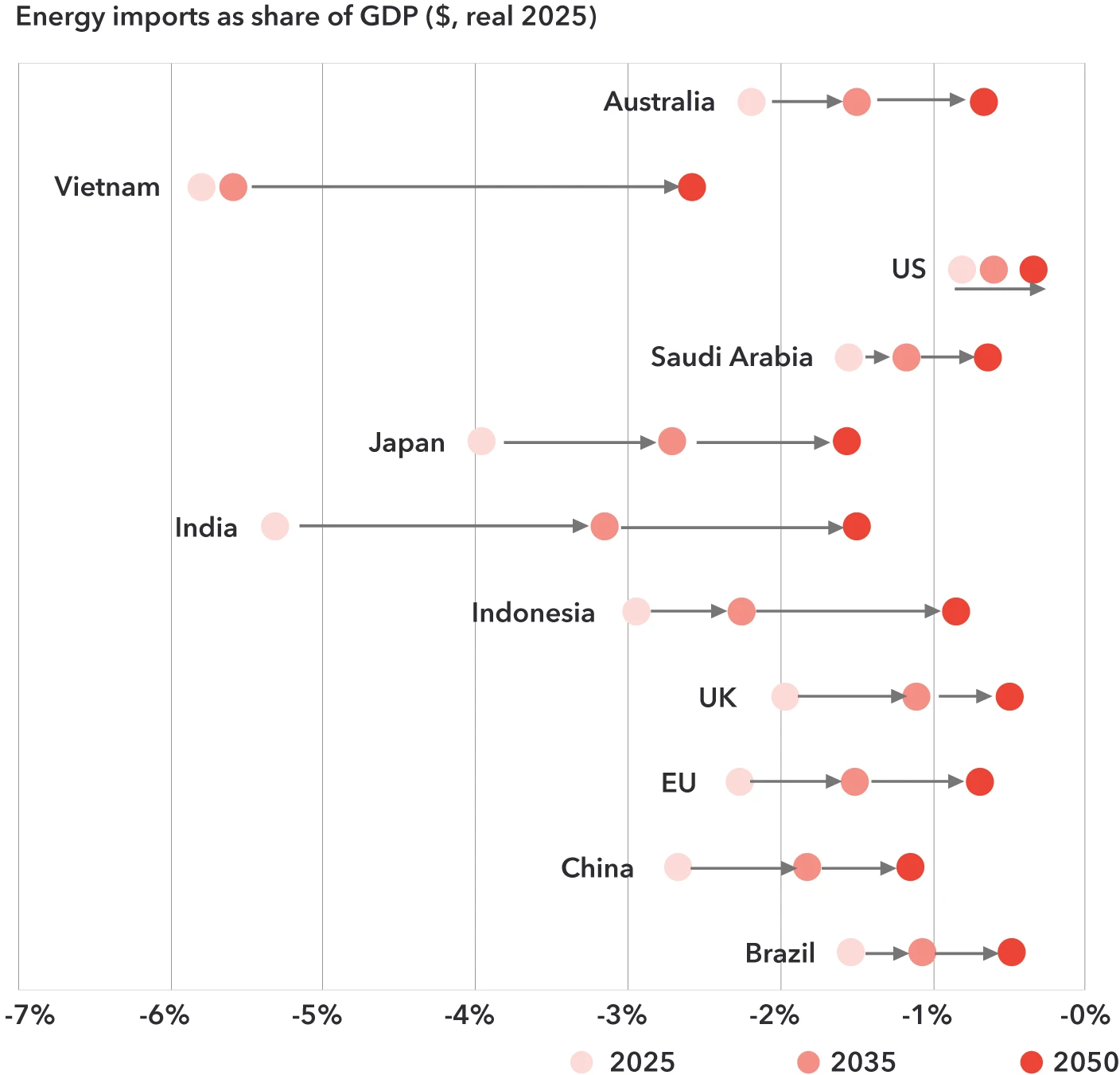
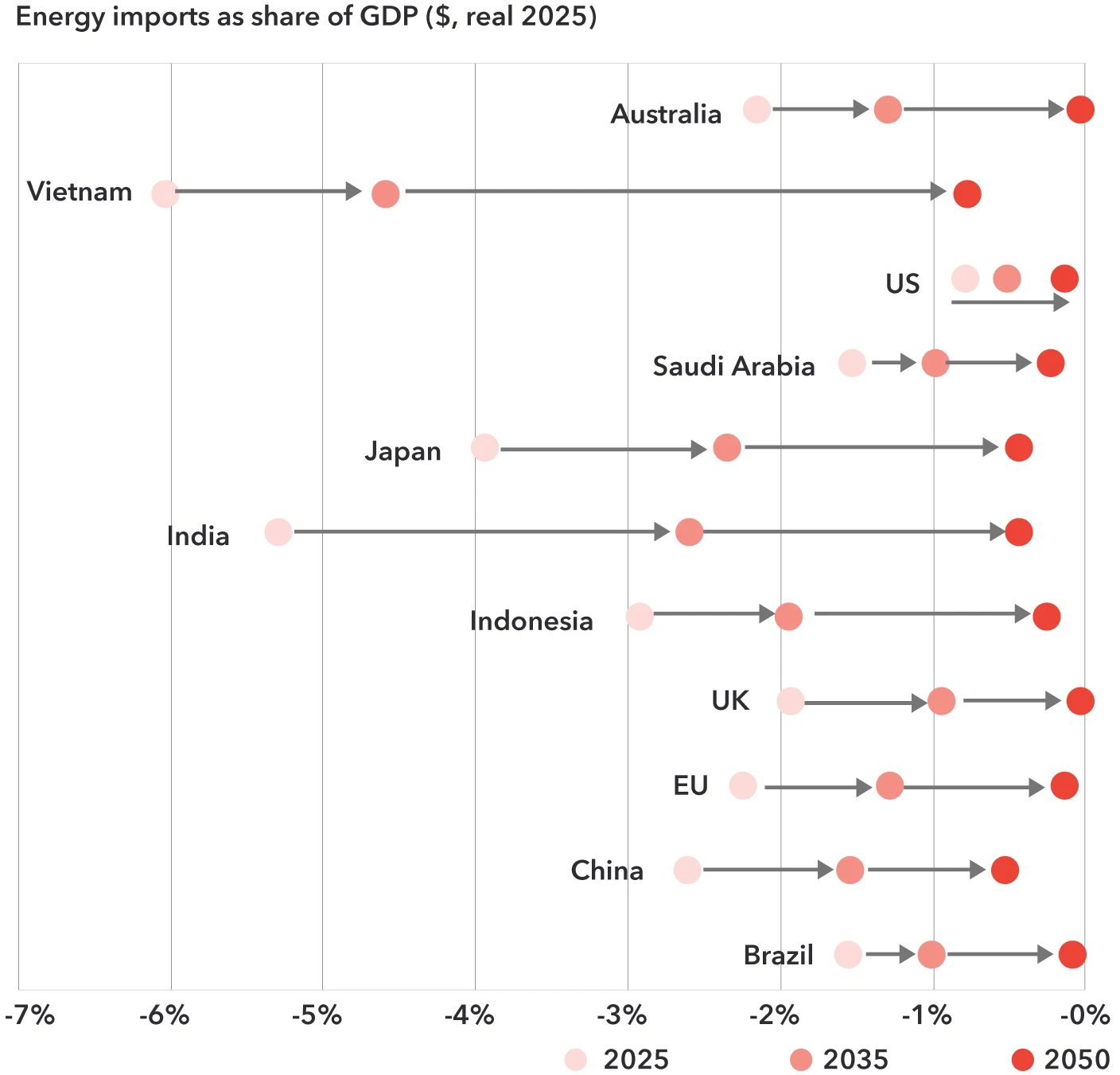
Strong fundamentals underpin growth in renewables, batteries and EVs
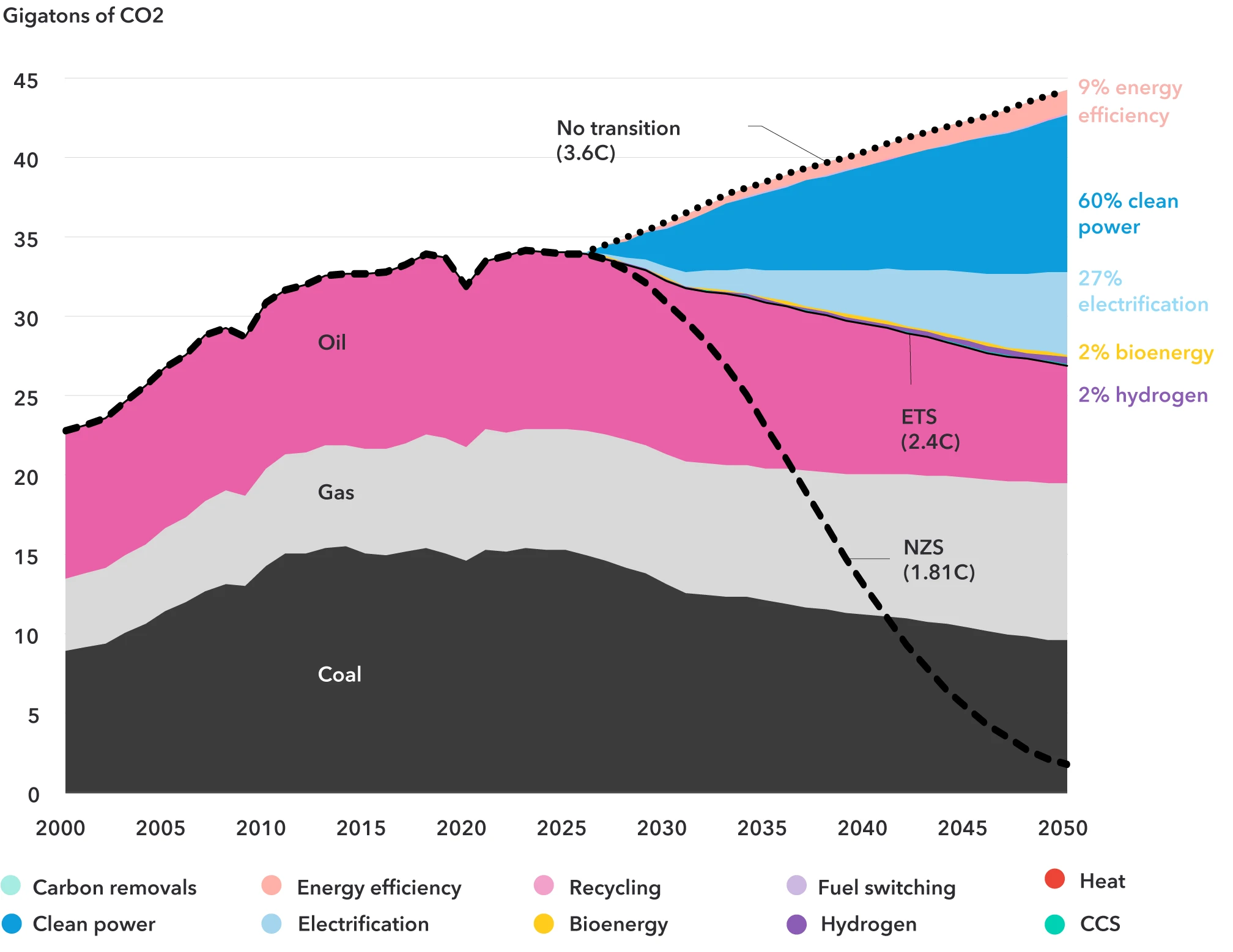
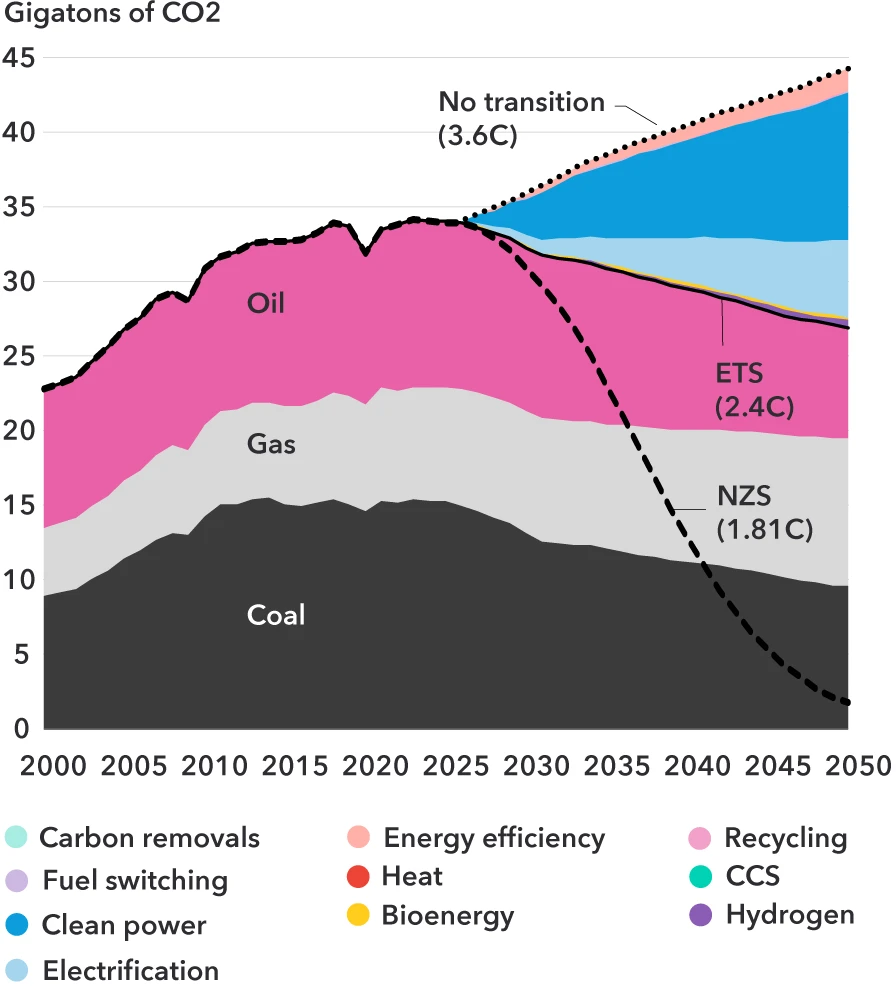
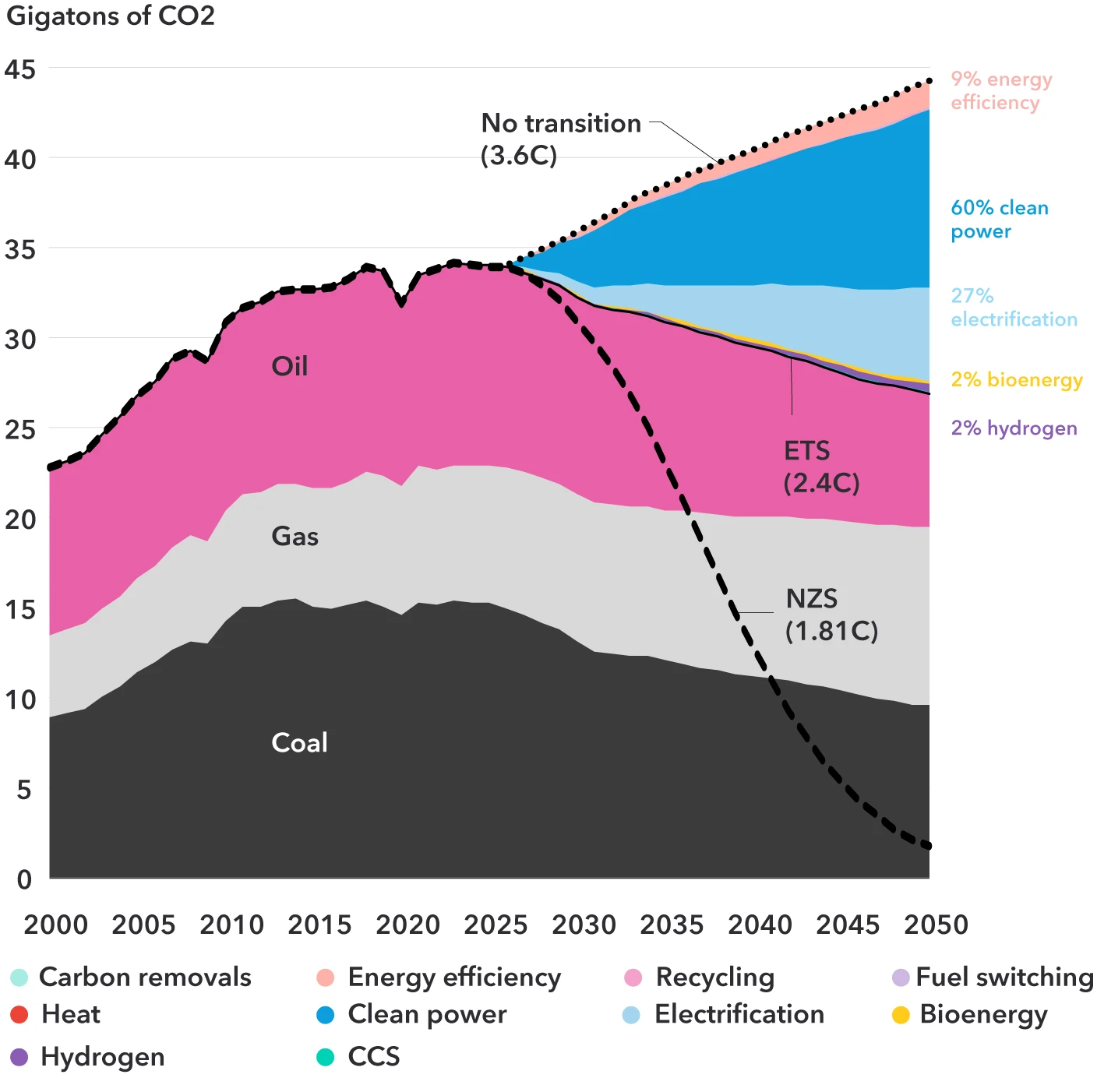
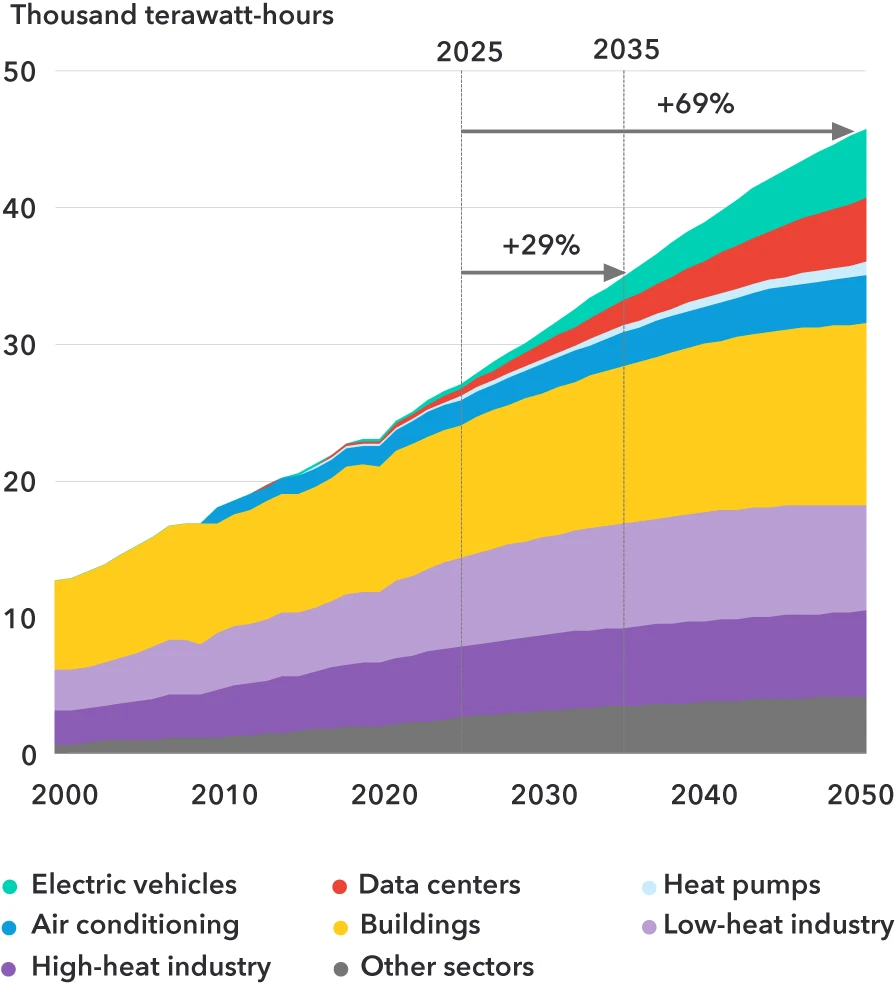
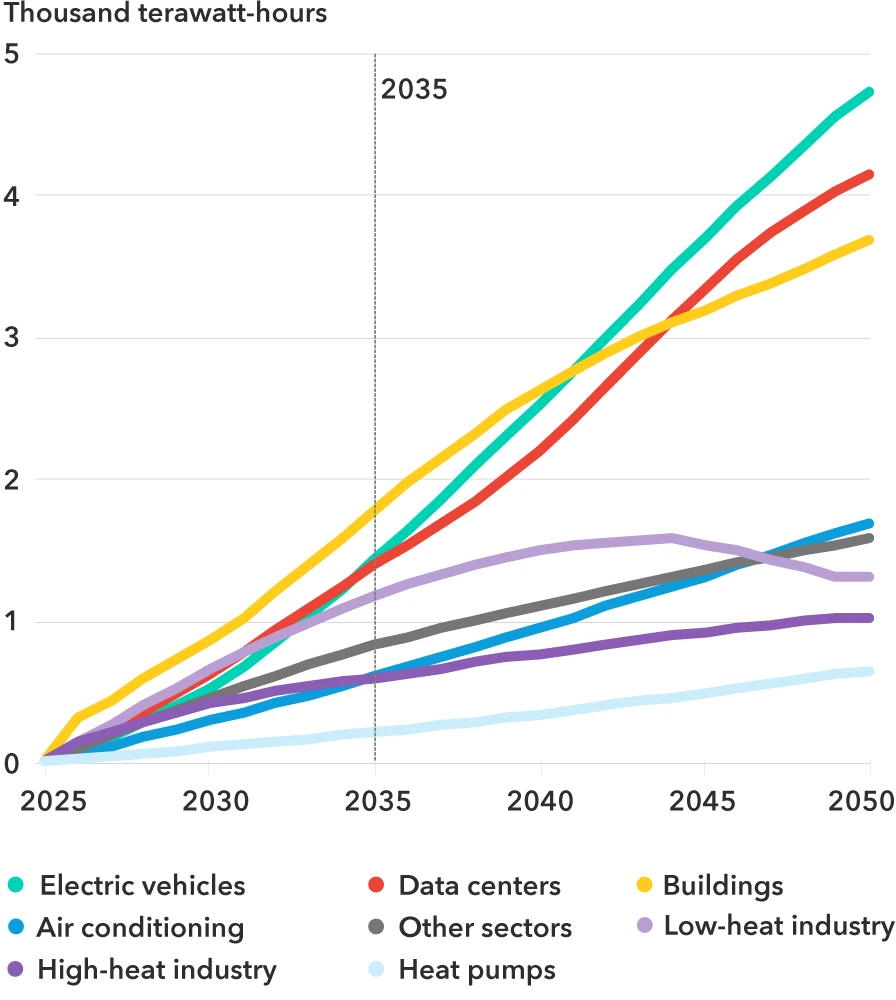
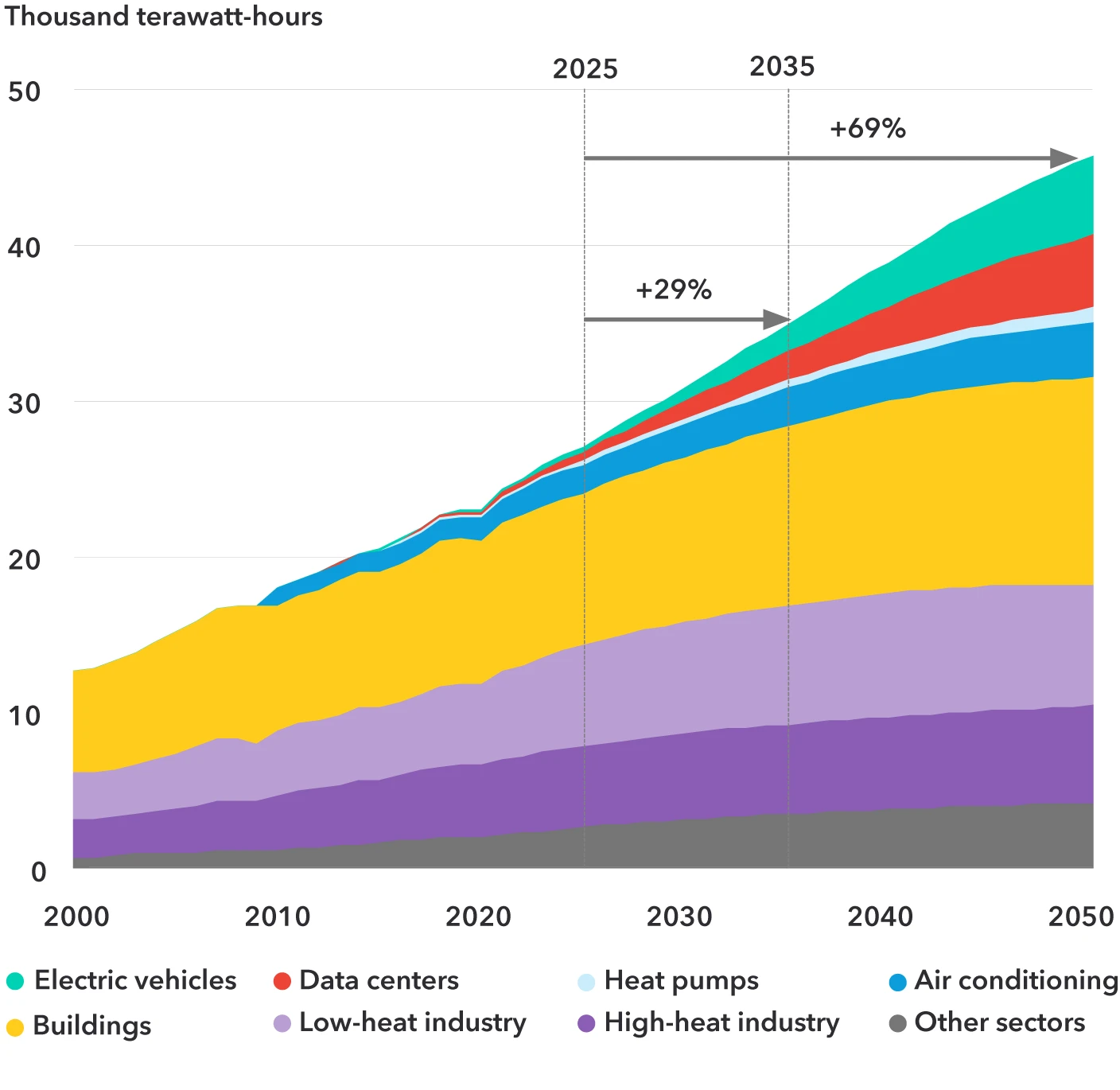
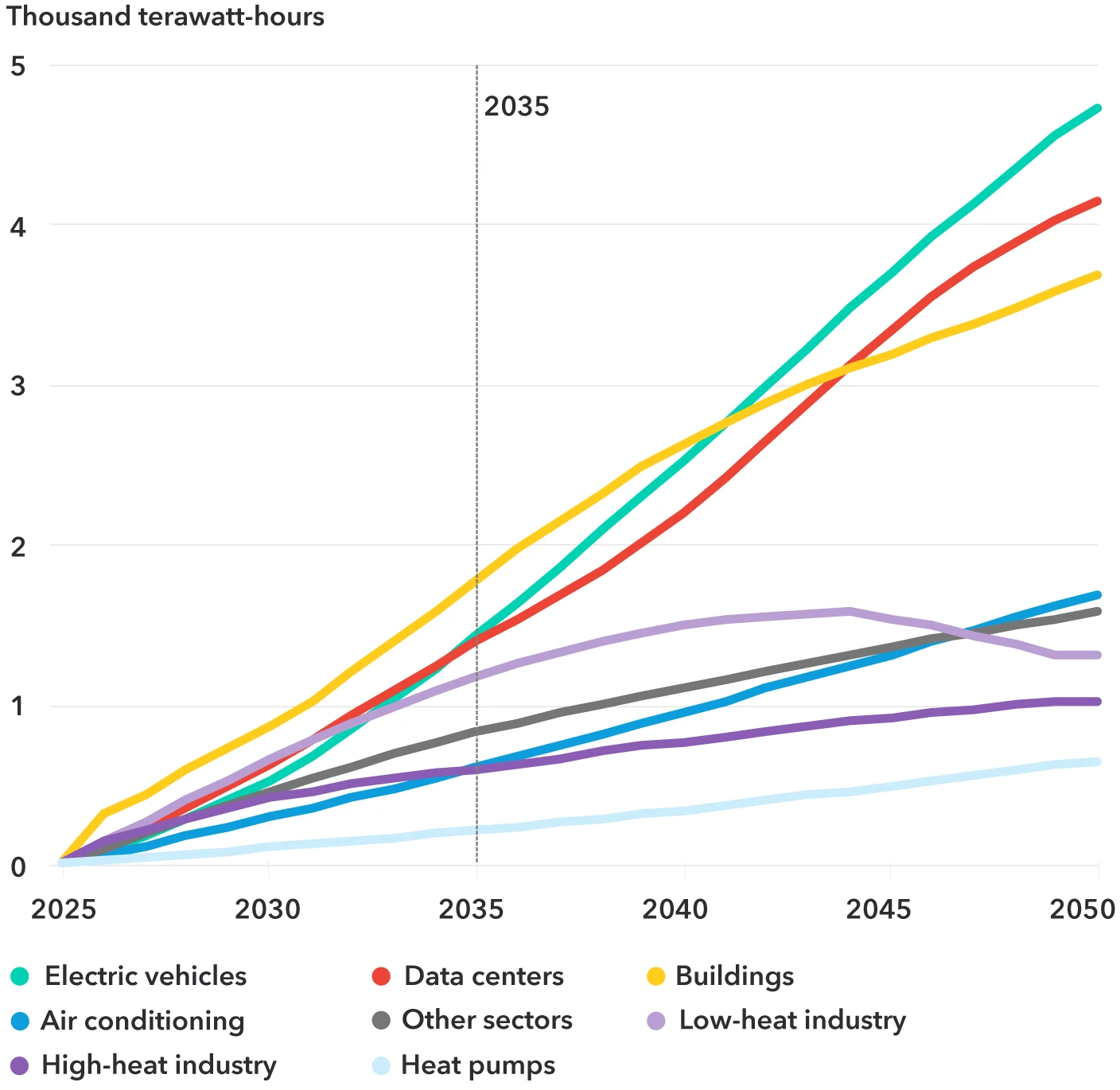
In the Economic Transition Scenario, emissions enter a gradual structural decline as clean technologies gain share based on economics alone. Most emissions reductions over the next decade come from clean power and electrification, with renewables displacing coal generation and electric vehicles slowing growth in oil demand. The Net Zero Scenario moves faster and further, combining accelerated deployment of renewables, batteries and EVs with large-scale use of hydrogen, carbon capture and sustainable fuels to drive deeper emissions reductions across industry, transport and buildings.
Download the executive summary and sample data
Enter your details below to download the Executive Summary and the Public Benchmark Dataset.
Bloomberg clients can access the Full Report and the Client Benchmark Dataset.
Report authors

David Hostert
Chief Economist, Lead author

Matthias Kimmel
Head of Energy Economics

Dr. Ian Berryman
Head of Energy Systems Modeling

Seohee Song
Energy Economics

Anushka Verma
Energy Economics

Kostas Pegios
Energy Systems Modeling

Alice He
Energy Systems Modeling

Amar Vasdev
Energy Economics

Rodrigo Quintero
Energy Economics
Co-authors

Allen Tom Abraham
Industry

Jenny Chase
Renewables

Caroline Chua
Scenarios

Helen Kou
Data centers

Fauziah Marzuki
Gas

Ethan Zindler
Summary findings
Estella Agyepong
Trade
Abdullah Alkattan
Middle East
Meredith Annex
Clean Power
Tushna Antia
Australia
Adithya Bhashyam
Europe
Tifenn Brandily
Trade
Tomas Butelman
Energy Economics
Forbes Chanthorn
Southeast Asia
Albert Cheung
Strategy
Claire Curry
Industry
Mark Daly
Data centers
Anastacia Davies
Renewable fuels
Kyle Disselkoen
Industry
David Doherty
Oil
Shannon Dong
China
Mbongeni Dube
Europe
Ryan Fisher
Electric vehicle charging
Laura Foroni
Power data
Chris Gadomski
Nuclear
Philip Geurts
Petrochemicals
Enrique Gonzalez
Gas
Andrew Grant
Electric vehicles
Lara Hayim
Solar
Julia Hung
Other Asia Pacific
Dr. Ali Izadi-Najafabadi
Asia Pacific
Shantanu Jaiswal
India and Southeast Asia
Shananthan Kalaichelvan
Electric vehicles
David Kang
Japan and South Korea
Isshu Kikuma
Batteries
Felix Kosasih
Southeast Asia
Nannan Kou
China
Reed Landberg
Editorial
Nathalie Limandibhratha
Data centers
Andrew Logan
Editorial
Claudio Lubis
Road and aviation fuels
Jinghong Lyu
Data centers
Sofia Maia
Power data
Colin McKerracher
Transport
Oliver Metcalfe
Wind
Stephan Mothe
Latin America
Nelson Nsitem
Africa
Vinicius Nunes
Latin America
Rose Oates
Renewable fuels
Shige Ogawa
Japan
Kokona Ota
Japan
Sofia Perelli-Rocco
Europe
Hanh Phan
Southeast Asia
Kate Power
Europe
Leonard Quong
Australia
Rafael Rabioglio
Latin America
Pietro Radoia
Solar
Peter Richard Wall
Grids
Daisy Robinson
Renewable fuels
Abhishek Rohatgi
Gas
Thomas Rowlands-Rees
North America
Umer Sadiq
Japan
Kesavarthiniy Savarimuthu
Europe
Kamala Schelling
Editorial
Yayoi Sekine
Batteries
Iryna Sereda
Gas
Ashish Sethia
Commodities
Siddharth Shetty
India
Sahaj Sood
Australia
Dr. Nikolas Soulopoulos
Commercial transport
Analeigh Suh
South Korea
Arhnue Tan
Europe
Sisi Tang
China
Yara van Ingen
Heat pumps
Mohith Velamala
Shipping
Ben Vickers
Editorial
Leo Wang
China
Nick Wang
Other Asia Pacific
Trina White
US
William Young
Financial institutions
Tianyi Zhao
China