PRESS RELEASE
BloombergNEF’S Transition Metals Outlook 2026: Global Metal Supply Shortages Set to Ease, but Copper Faces a $332 Billion Investment Gap

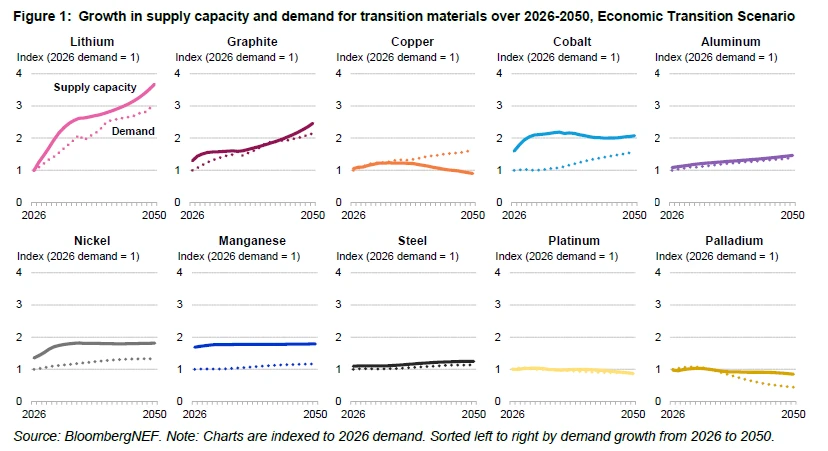
- BloombergNEF’s (BNEF) Transition Metals Outlook 2026 finds that nine of the 10 materials studied are on track to have sufficient supply capacity through 2050, a significant improvement on previous forecasts.
- A looming copper supply deficit could reach 44% of global demand by 2050, requiring $332 billion investment in new mines, risking higher prices and slower electrification.
- Demand for lithium is set to triple by 2050, and demand for graphite is expected to more than double, due to a battery boom. Meanwhile, advances in battery technology reduce projected demand for cobalt and nickel.
London, October 20, 2026 – Global shortages of metals essential to the energy transition, forecast to emerge across several key commodities a few years ago, are now expected to ease significantly. However, a looming copper deficit could threaten the pace of electrification and require $332 billion of investment in new mines, according to BloombergNEF’s (BNEF) Transition Metals Outlook 2026.
The outlook for metals has improved considerably in recent years. Just a few years ago, the risk of widespread shortages threatened to constrain the shift to cleaner technologies. BNEF now expects nine of the 10 materials covered in its outlook to have sufficient long-term supply capacity through 2050, provided producers continue to develop mines and replace depleted reserves. This marks an improvement on last year’s outlook, when three materials were projected to face deficits.
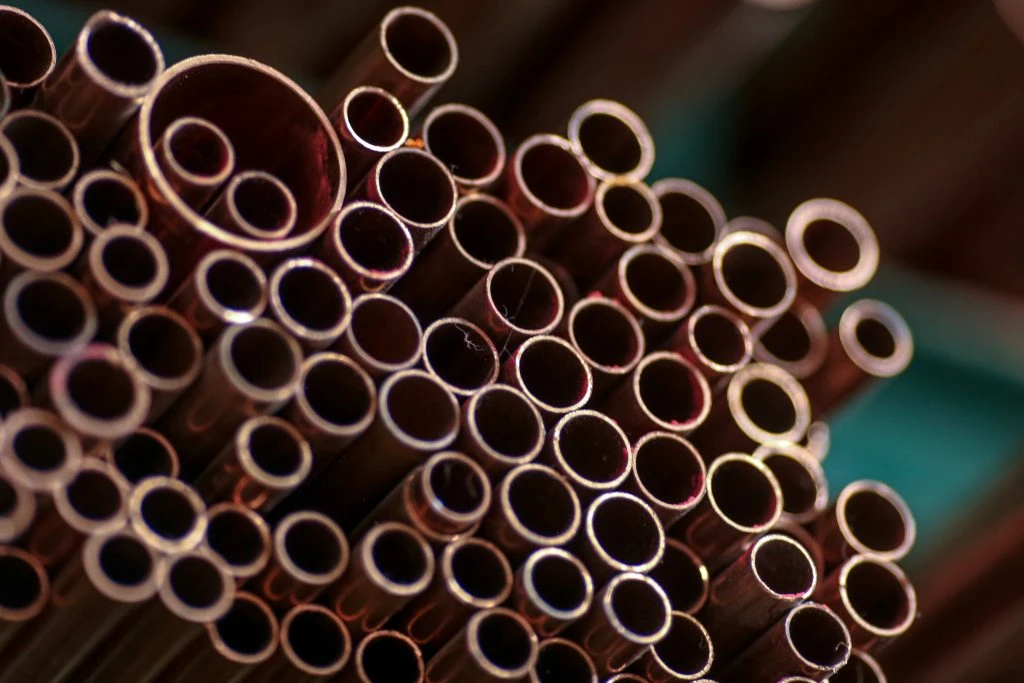
Copper remains the major exception. BNEF forecasts a supply deficit beginning in 2028 and widening to 20 million metric tons by 2050 – equivalent to 44% of projected global demand. The shortfall could push up prices, force manufacturers to use alternative materials and slow the deployment of electric vehicles, batteries and electricity grids.
Even with the necessary investment, bringing new mines into operation takes an average of 17 years, meaning the shortfall could persist for decades. Declining ore quality and years of underinvestment in exploration are adding to the challenge.
What’s more, demand for copper is expected to rise by 61% between 2026 and 2050, reaching almost 46 million tons. Growing demand from electric vehicles, electricity grids and other applications is putting pressure on supply, with copper use in electrified transport alone projected to increase by 244% to 11.4 million tons
Martin Tengler, Head of Metals and Mining at BloombergNEF, said: “The outlook for transition metals has changed dramatically. Investment in new supply and advances in battery technology have eased many of the concerns we saw just a few years ago. The challenge now is less about whether the world can produce enough metals overall, and more about whether the right materials will be available when and where they are needed. For governments and businesses, securing reliable supply and making the right investment decisions will be increasingly important.”
Other key findings from the report include:
- Lithium demand is forecast to nearly triple to 4.8 million metric tons of lithium carbonate equivalent by 2050 from 1.6 million tons in 2026, while graphite demand is set to more than double to 6.9 million metric tons from 3.3 million. Both jumps are driven by the growth of electric vehicles and energy storage.
- Meanwhile, the growing adoption of lithium iron phosphate batteries has reduced BNEF’s projected demand for cobalt and nickel compared with previous editions of the report.
- China continues to dominate global metals refining, raising supply security concerns. Eight of the 10 materials studied have more than half their refining capacity concentrated in a single country; seven of these are in China.
- Oversupply could put pressure on prices and mining investment. BNEF expects long-term downward price pressure on cobalt, lithium, manganese, nickel and palladium, potentially prompting miners to cut costs, limit production or close capacity. Graphite, platinum and steel have shifted from projected deficits to surpluses compared with last year’s outlook.
- Short-term shortages on some metals remain a risk despite improvements on long-term supply. Lithium faces a temporary deficit, but this is expected to ease as new capacity comes online in 2027. Meanwhile, palladium’s deficit is projected to persist until around 2034. Government restrictions on cobalt exports from the Democratic Republic of Congo and nickel production in Indonesia could also constrain availability.
- Recycling will become essential to meeting global metals demand. Six of the 10 materials studied will require recycling to meet projected demand by 2035, rising to eight by 2050.
BloombergNEF clients can find the full report and full data viewer on bnef.com and the Bloomberg Terminal.
Notes to Editor
The Transition Metals Outlook (TMO) is BloombergNEF’s annual long-term outlook for metals essential to the energy transition. TMO 2026 projects long-term demand, supply capacity, availability and security, and near-term price trends, for 10 metals and minerals: aluminum, cobalt, copper, graphite, lithium, manganese, nickel, platinum, palladium and steel.
Media Contact
Oktavia Catsaros
BloombergNEF
ocatsaros@bloomberg.net
About BloombergNEF
Founded in 2004, BloombergNEF (BNEF) is a strategic research provider covering global commodity markets and the transformative forces reshaping energy systems and infrastructure. Our experts assess the technological, economic and policy drivers that underpin the transition to a cleaner, more resilient energy economy. We help senior leaders in corporate strategy, finance, policy and commodity trading navigate change and generate opportunities.
About Bloomberg
Bloomberg is a global leader in business and financial information, delivering trusted data, news, and insights that bring transparency, efficiency, and fairness to markets. The company helps connect influential communities across the global financial ecosystem via reliable technology solutions that enable our customers to make more informed decisions and foster better collaboration. For more information, visit Bloomberg.com/company or request a demo.
Related Content