ARTICLE
Europe’s Energy Transition Enters a New Phase: Six themes From the BNEF Summit London 2026

By Sunny Partk, BNEF Summit team
Europe is no longer asking whether it can build a cleaner energy system. The question now is whether it can build one that is also affordable, secure, globally competitive and resilient. How does it impact grids, consumers, commodities, industry, policy and supply chains.
Clean energy is also increasingly being viewed as part of a wider system, connecting generation with grids, consumers, commodities, industry, policy and supply chains.
At the BNEF Summit London 2026, policymakers, executives and investors debated a spectrum of issues, from grid bottlenecks and rising electricity demand to industrial strategy, critical minerals and climate risk. Six themes emerged.
1. Energy security now means more than barrels, but it also requires more barrels
For years, Europe worried about stagnant electricity demand. Artificial intelligence (AI) and data centers, alongside electric vehicles, heat pumps and cooling were repeatedly cited as drivers of future growth at the Summit. BloombergNEF projects European electricity demand could increase by 76% by 2050.
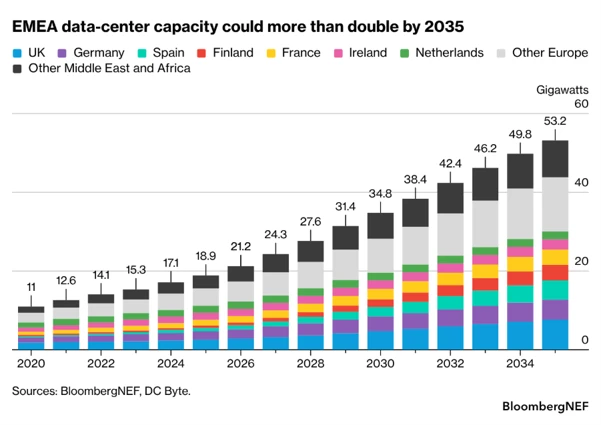
As a result, discussions about AI shifted from computing power to energy infrastructure. Several speakers argued that Europe’s future competitiveness may depend as much on access to reliable, affordable electricity as on digital capabilities.
2. Energy security is reshaping the case for clean power
Four years after the collapse in Russian gas supplies exposed Europe’s vulnerabilities, the recent Iran war provided another test of the region’s energy security. Speakers noted that the continent remains exposed to geopolitical shocks and pays higher energy costs than many competing economies.
What has changed is how Europe makes the case for the transition. Rather than treating decarbonization and competitiveness as competing priorities, many speakers argued that electrification and clean power are now the route to a more secure, affordable energy system. Increasingly, the transition is being justified on security and cost grounds, not climate alone.
“We need to electrify far quicker. The best way to get to a cheaper, more secure, and cleaner future is to encourage people to electrify…”, said Andrew Bowie, UK shadow secretary of state for energy security and net zero.
3. Europe’s power system needs speed
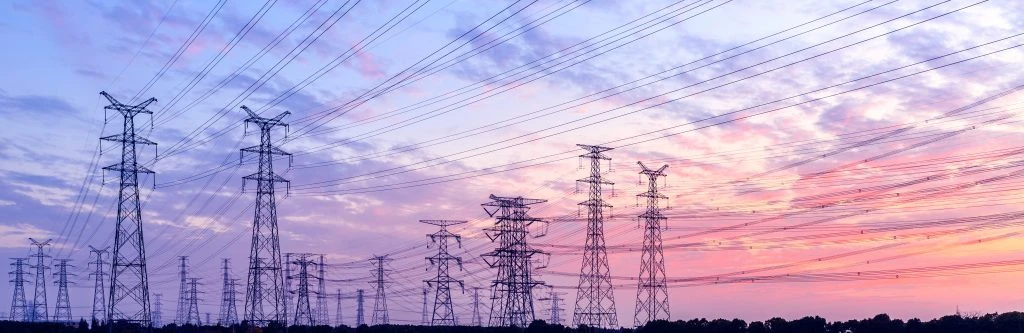
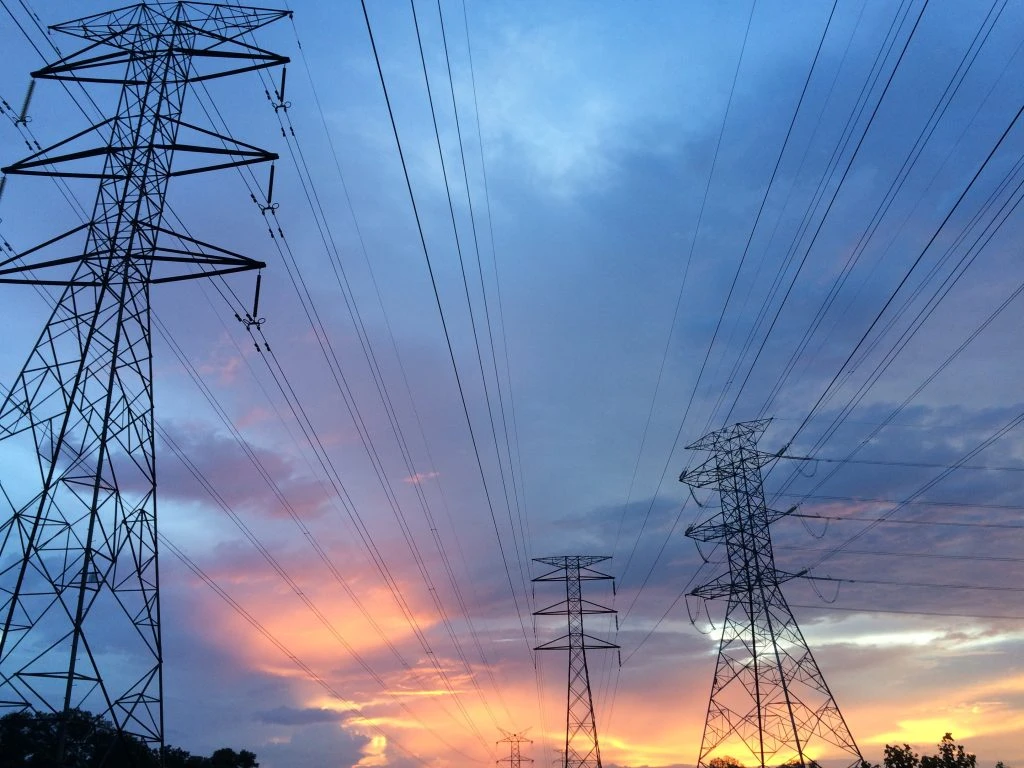
If security and competitiveness were the summit’s overarching themes, the grid was the challenge that linked nearly every discussion. From data centers to industrial electrification, speakers repeatedly highlighted the mismatch between how fast electricity demand is growing and how long it takes to expand the infrastructure to serve it.
Bernard Gustin, CEO of Elia Group, illustrated the gap between infrastructure timelines, regulatory timeframes and demand: “It takes two years to build data centers… and 10 years to build a high-voltage grid line. Nine years of administrative work and one year of real work, and that needs to change.”
Batteries, software and demand-side flexibility were seen as important tools to optimize existing networks. But the discussions also pointed to a broader need to rethink how the power system develops. As Greg Jackson, Founder and Chief Executive Officer of Octopus Energy, argued: “We can build out our new system dramatically faster if we take the systems thinking and join consumption and generation and think about the two together.”
Europe’s next challenge is not simply to build more grid infrastructure, but to speed up how it is planned and delivered while creating a more integrated system in which generation, demand and networks evolve together.
4. Europe is rethinking its industrial strategy
As Europe seeks to strengthen competitiveness and resilience, the industrial policy debate is shifting from how much to manufacture at home to which capabilities are strategically important to retain. Across discussions spanning wind equipment, grids, batteries and critical minerals, speakers argued for a more selective approach to building European industrial strength.
Wadia Fruegaard, senior director, head of policy and EU affairs at Vestas Wind Systems put it this way: “We don’t have to do everything ourselves. There are others who have done things far better than we have.”
The discussions went beyond subsidies or protectionism. Speakers focused on creating demand certainty, accelerating deployment and strengthening the industrial ecosystems where Europe can remain competitive.
5. Critical minerals remain in focus, with copper standing apart
Supply-chain security remains central to the energy transition, but this year’s discussion pointed to a more specific challenge. The Transition Metals Outlook 2026, presented at the summit, shows that supply capacity can meet demand for most transition metals, with copper emerging as the main exception.
Grid expansion and electrification are copper-intensive worldwide, and Europe is no exception. Securing enough supply will depend on bringing new resources into production, not only on how fast demand grows.
“The world is going to have to take more risk and develop projects that are currently not in production,” said Catherine Raw, chief development officer at BHP.
6. Climate resilience is becoming an investment theme
Adaptation and resilience featured far more prominently than at previous BNEF summits, as investors increasingly treated physical climate impacts as a present financial issue rather than a long-term scenario exercise. Heatwaves, droughts and floods are already affecting power generation, electricity demand and infrastructure.
Lucia Graham-Wood, senior engagement specialist at the Institutional Investors Group on Climate Change, noted that “physical risk is starting to really manifest in portfolios.”
The discussion also highlighted a shift in mindset. Resilience is no longer seen only as a defensive measure, but increasingly as a source of competitive advantage for companies that can anticipate risk, strengthen assets and adapt faster than their peers.
To dive deeper into these themes and more, watch a selection of videos from the BNEF Summit London. The annual summit brought together almost 900 stakeholders in –person and remotely from the energy, industry, finance, commodities and technology communities, as well as investors, financiers and policymakers.
The next BNEF Summits will take place in Houston on November 11, Shanghai on December 1-2, San Francisco on February 9, 2027, Beijing on March 24, 2027 and New York on April 27-28, 2027.
For any queries, please reach out to bnefsummit@bloomberg.net
Related Content