By Vandana Gombar, Senior Editor, BloombergNEF
Solar is set to oust coal as the leading generator of electricity within six years, BloombergNEF finds in its latest energy transition outlook, despite a first ever slight dip in installations in 2026.
“Solar is the cheapest source of power in many countries, and is proving the easiest and fastest to deploy,” said Jenny Chase, BNEF’s clean power specialist. “Its role in the global energy mix will be substantial, ushering in a new age where power is cheap whenever the sun shines.”
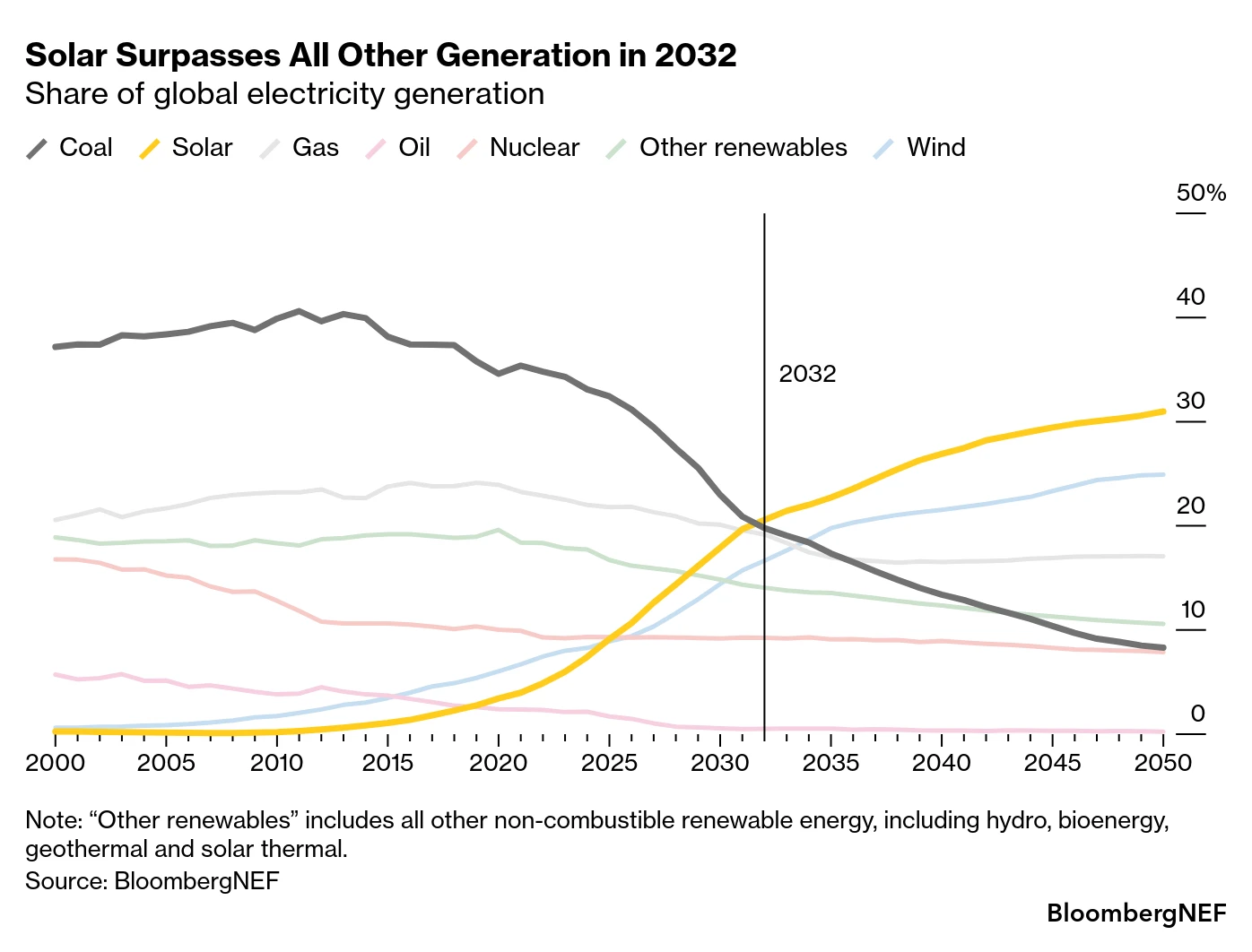
“Solar and batteries will transform world power markets in the next 10 years,” Chase said, though trade barriers may slow progress in markets that implement them. Revenue cannibalization is also an issue as low power prices at peak generating periods hit developers’ revenues. Batteries help mitigate that problem but at higher levels of deployment, their utilization falls, which weakens their economic case.
1. Solar’s steady growth
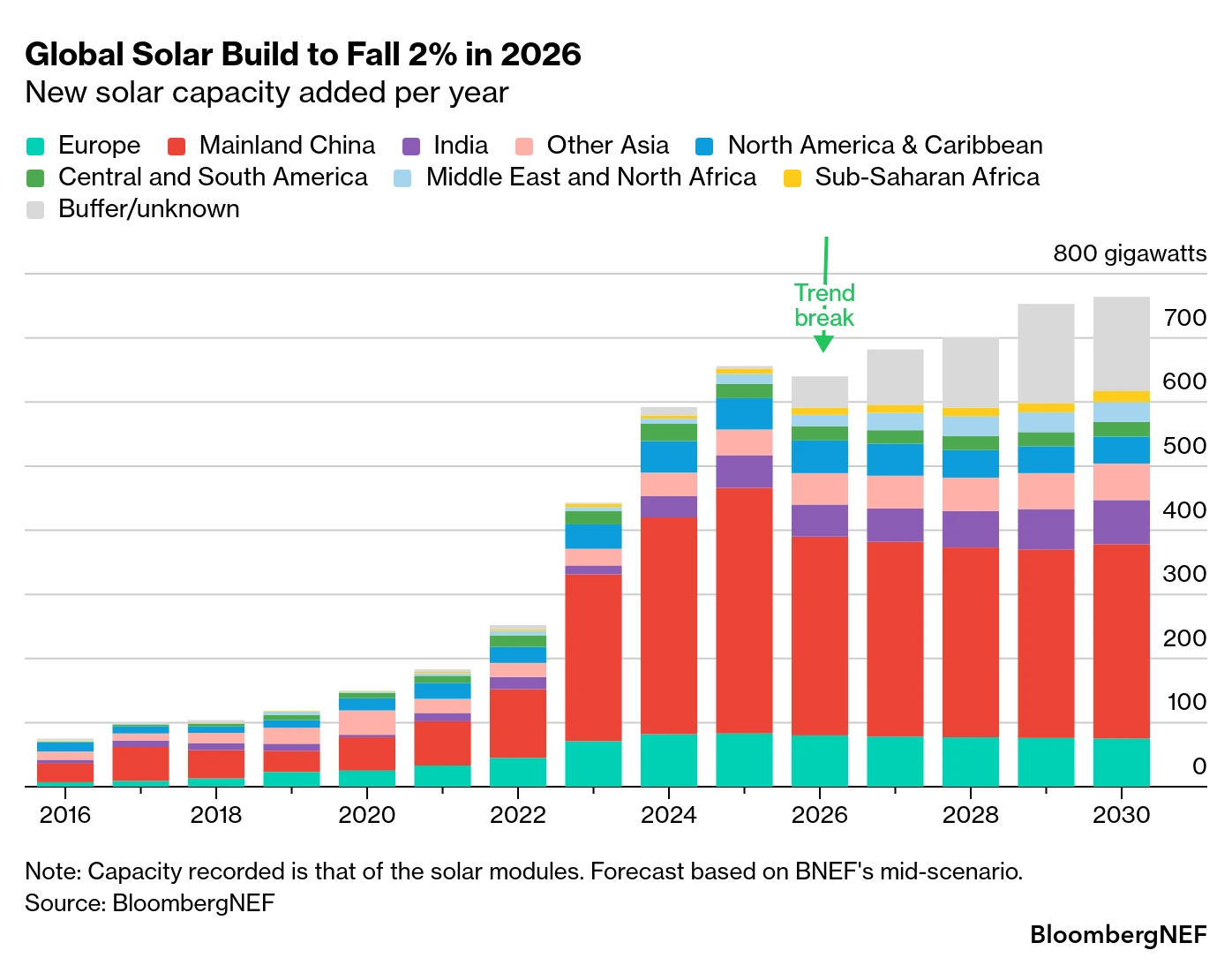
Solar has charted a steady growth path over the last two decades, with more capacity added every year compared to the one before. The pace of global annual installations jumped from less than 100 gigawatts in 2016 to over 650 gigawatts last year. However, BNEF sees 640 gigawatts of solar installations this year, the first year-on-year dip. Growth in installations resumes again from 2027.
2. Cost of solar
Fixed-axis PV is the cheapest source for new generation, and will remain so this year, with onshore wind a close second, according to the most recent global levelized cost of electricity benchmarks from BNEF.
Coal is almost double the cost of these cost-competitive two technologies, and is even higher than battery storage, which has seen the most dramatic fall in costs over the last few years.
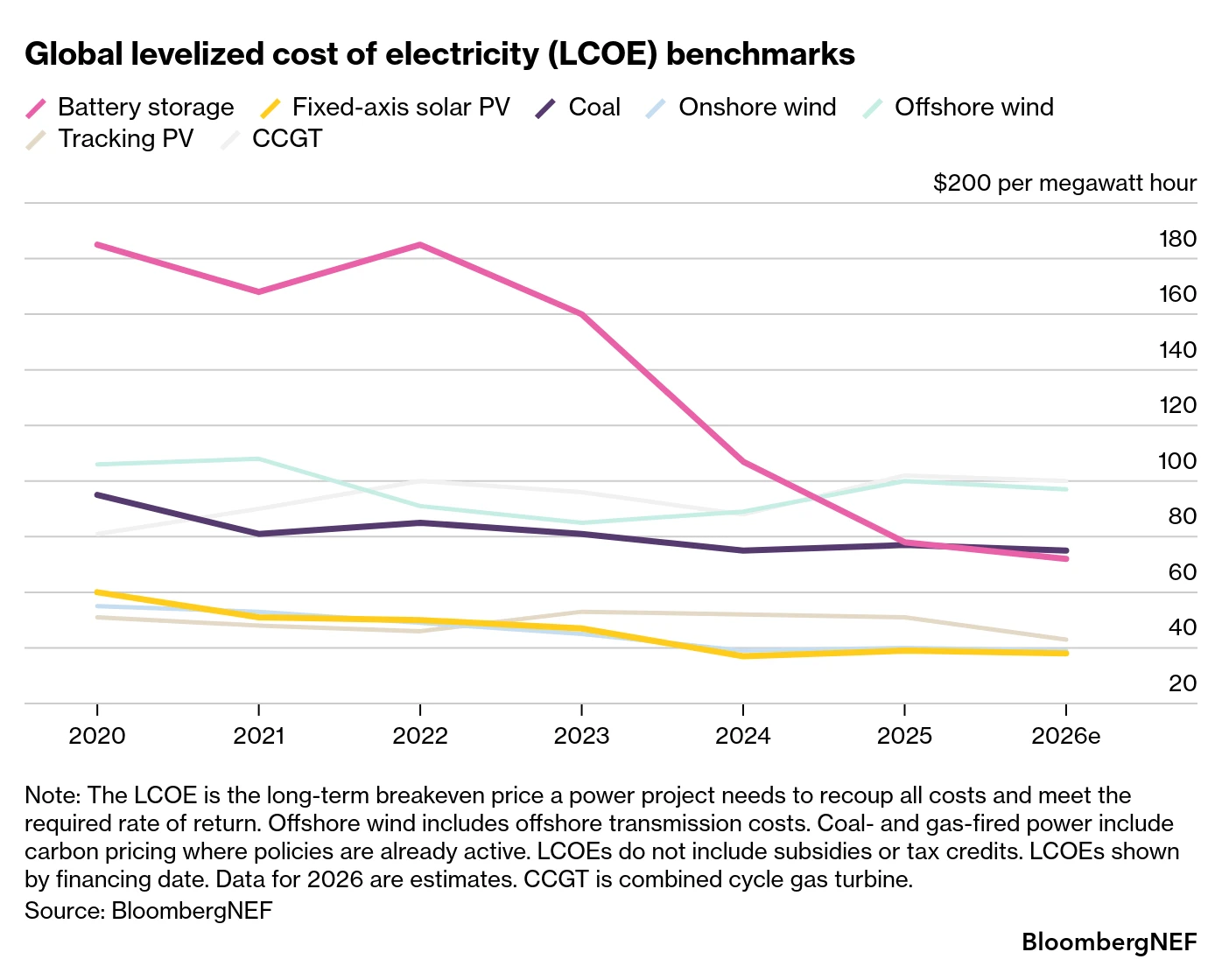
The highest cost technologies are gas (combined cycle gas turbine) and offshore wind.
3. Largest solar markets – China, India, US
China is the largest market for solar by far, followed by an eclectic list of countries with India, the US and Germany next in line in terms of gigawatts expected to be installed this year. Pakistan rounds out the top five economies for solar. The next set of five includes Brazil, Japan and Saudi Arabia.
Concerns around growth in solar usually focus on China’s dominance of equipment manufacturing. Quite a few countries have launched incentive programs to encourage domestic assembly of modules, the manufacture of cells and wafers, or the production of polysilicon.
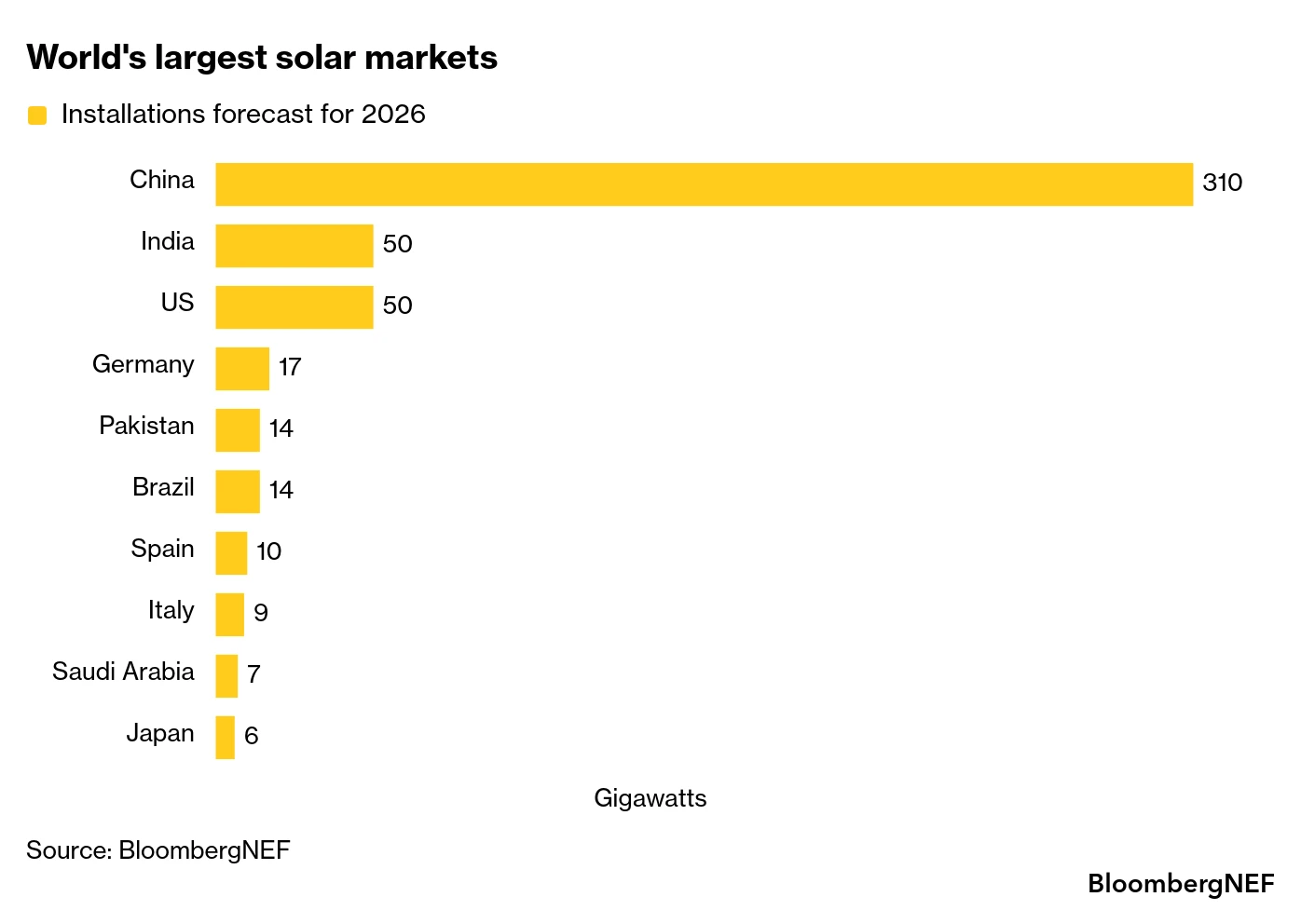
As many as 46 markets around the world will install over a gigawatt of solar each in 2026.