Mexico is entering a pivotal moment for its energy system and economy more broadly. Power-sector reforms, shifting oil and gas trade flows, US-Mexico-Canada Agreement negotiations and industrial competitiveness are converging to reshape the country’s investment landscape.
BloombergNEF’s Mexico Transition Factbook aims to help policy, business and investment professionals understand how Mexico’s key sectors are evolving, where opportunities and risks are emerging, and what these shifts mean for the country’s competitiveness, energy security and long-term growth.
By the numbers
Investment in new power generation assets in Mexico through 2035, under BNEF’s Economic Transition Scenario
Installed wind, solar and storage capacity in Mexico in 2050, under BNEF’s Economic Transition Scenario
Forecast share of net US gas imports in Mexico’s total gas supply in 2030, up from 75% in 2025
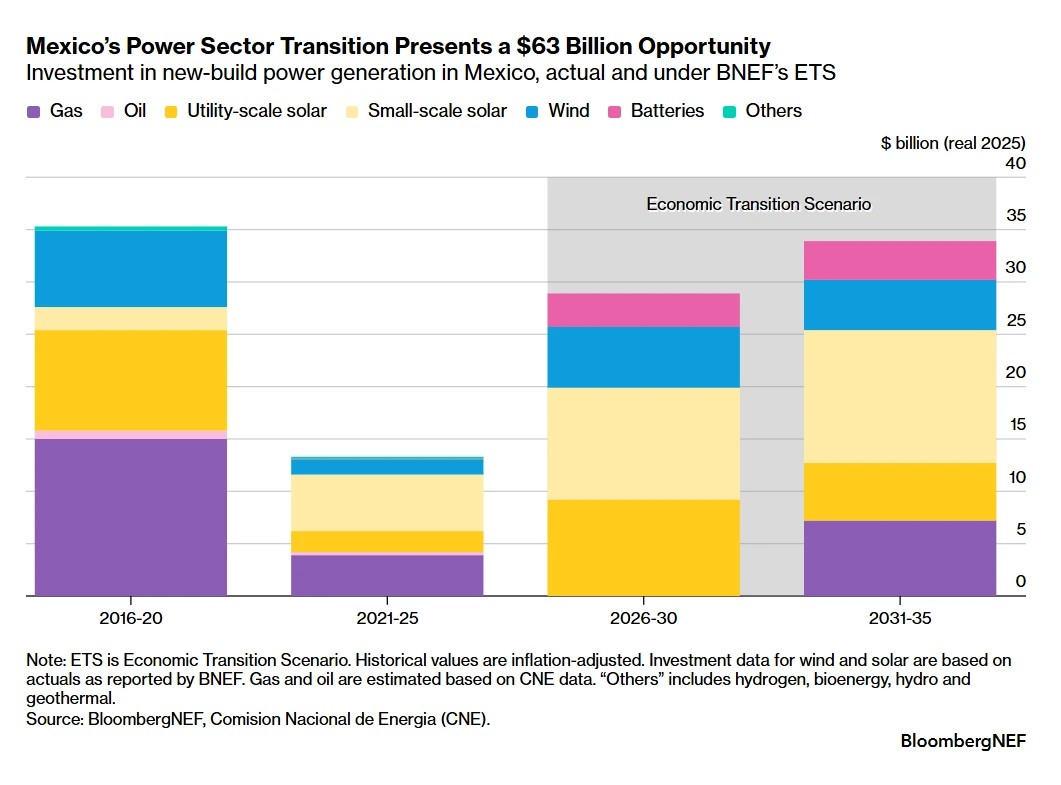
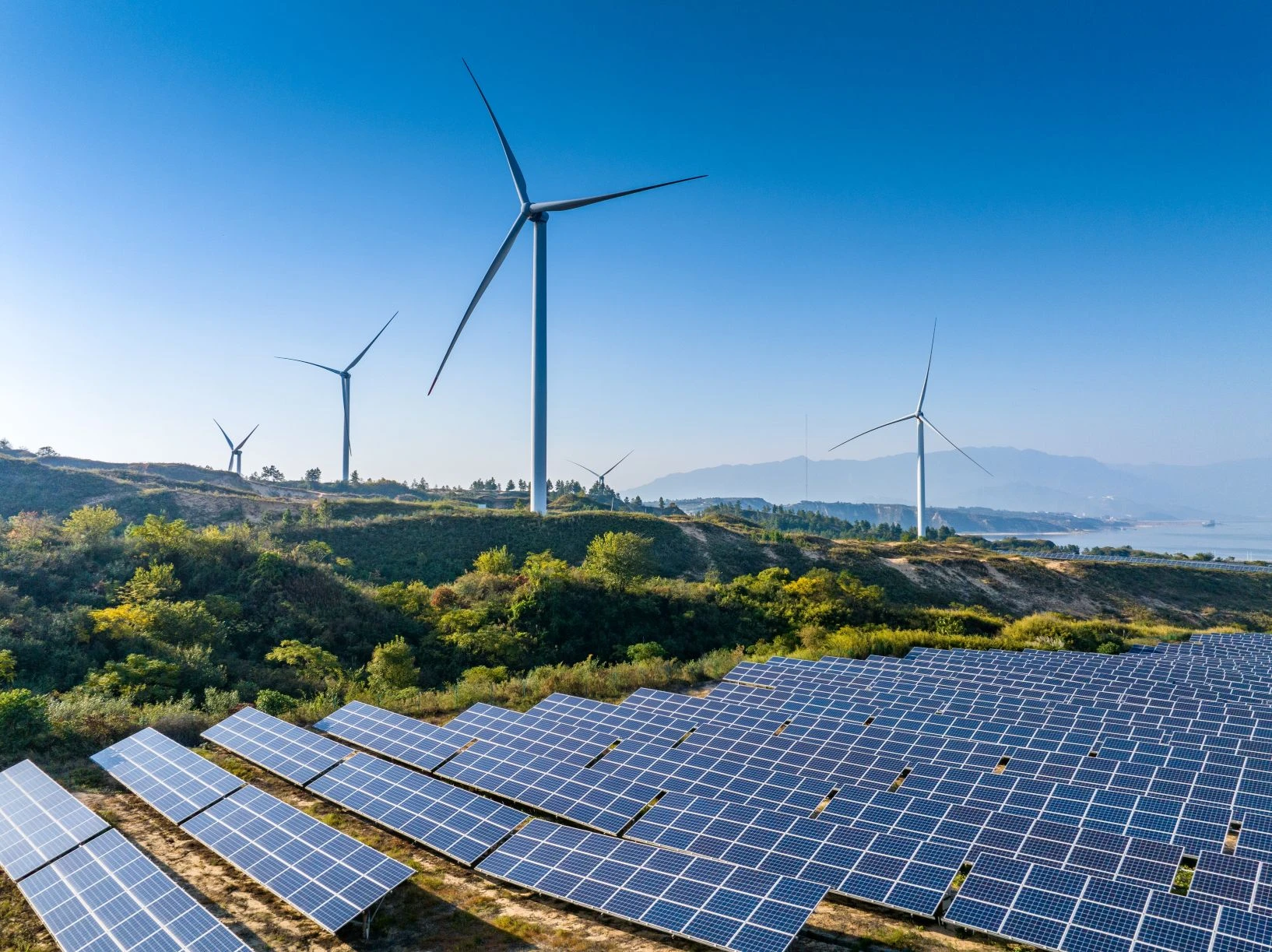
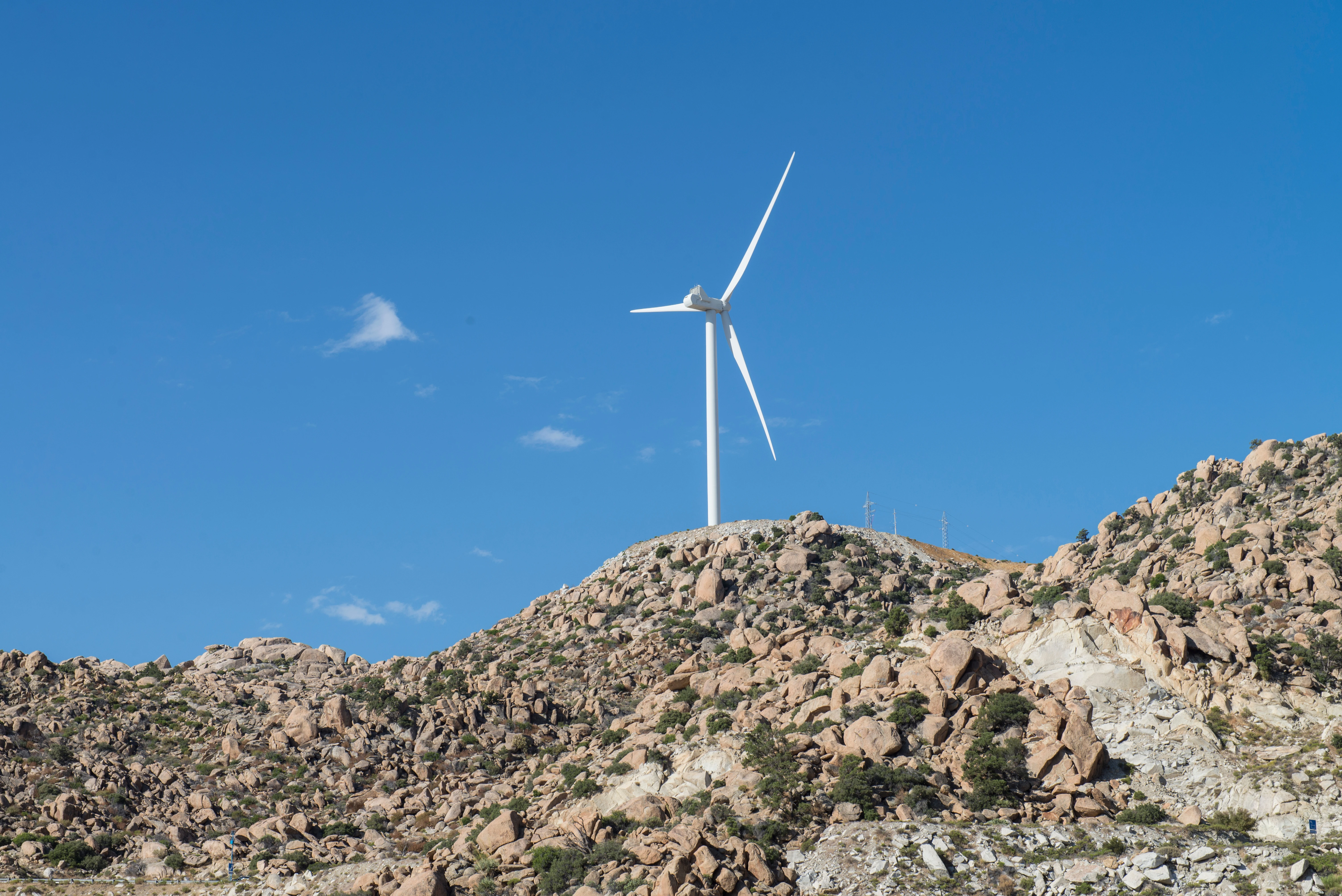
- Mexico’s clean power sector is going through a major reform. Following years of depressed investment, President Claudia Sheinbaum’s administration is pushing towards more private sector involvement. The government is planning to add almost 30 gigawatts of new solar, wind and storage capacity by 2030. Looking forward, BNEF energy scenarios indicate a $63 billion investment opportunity across power generation technologies through 2035, with clean energy surpassing 80% of total capacity by 2050.
- The relevance of oil and gas in Mexico’s energy generation is set to decline through 2050. Still, Mexico’s total gas demand rises, and dependence on US gas imports is forecast to increase, posing energy security risks. Mexican oil production will require more investment in aging oil fields to meet Pemex’s goals of maintaining stable production levels over the next decade, and the country is among the large American markets most exposed to price shocks, given its trade deficits for both oil and gas.
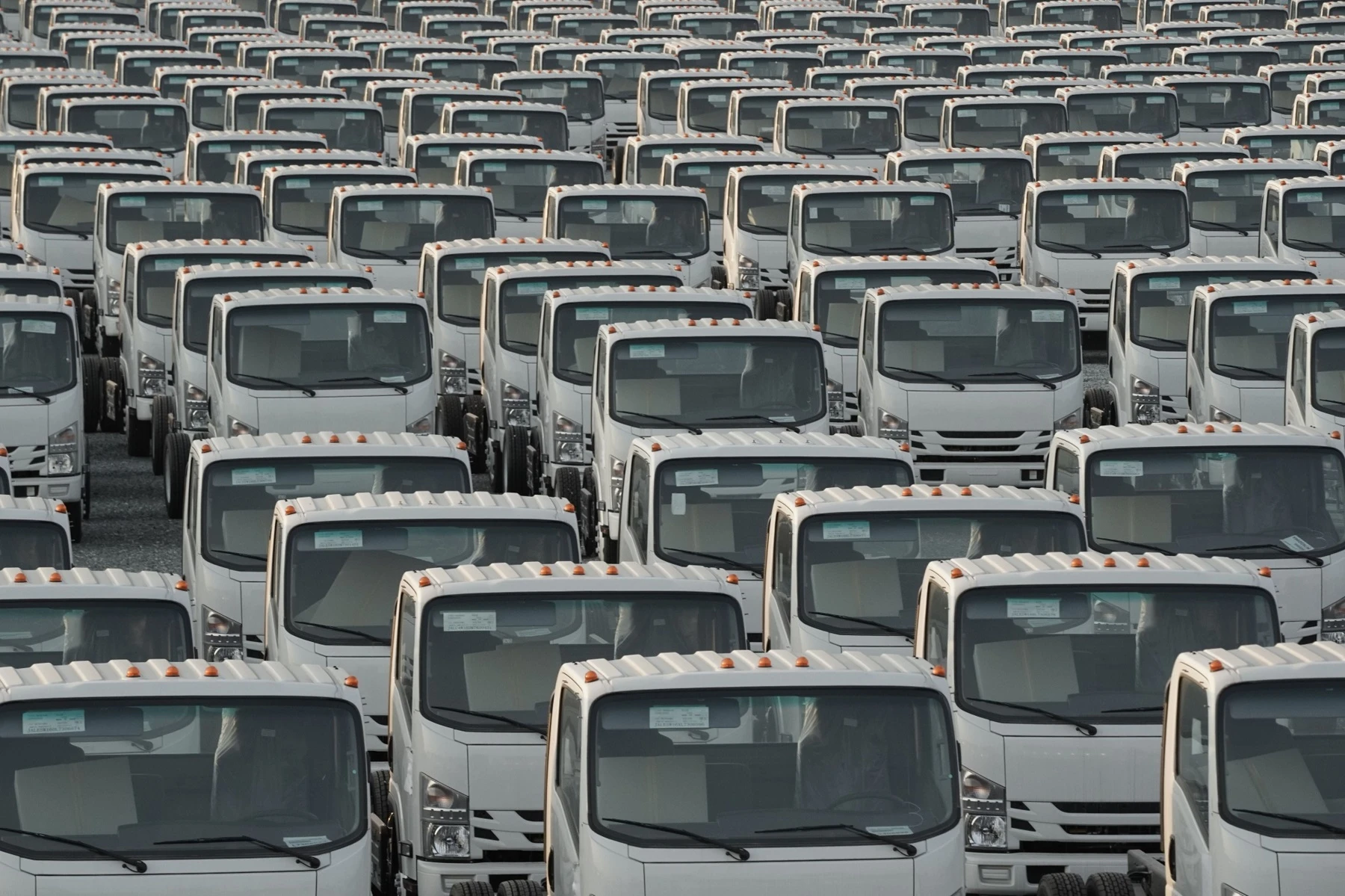
- Electrified transport is taking off in Mexico. A reduced total cost of ownership has propelled electric vehicles to approximately 8% of all new passenger car sales in the country. And while EV-related imports have grown 10-fold since 2020, Mexico’s own export-oriented EV industry hinges on its integration into North American supply chains, highlighting the importance of USMCA renegotiations.
- Mexico’s steel and cement industries stand out as regional and global leaders in industrial decarbonization initiatives. A domestic carbon market – expected to launch in 2026 – is likely to further accelerate a move toward lower-carbon forms of industrial production and output.
- Sustainable debt financing Mexico’s energy transition fell in 2025 after reaching a peak of $7.3 billion in 2024. Power grids are particularly in need of finance, requiring at least triple the current levels of investment.
BloombergNEF clients can access the full report here.