ARTICLE
The Electric Trucking Market’s Record Rise: Three Things to Know
Key Takeaways
- Electric truck sales hit record 158,000 in first half of 2026
- New models and financing methods grow market beyond China
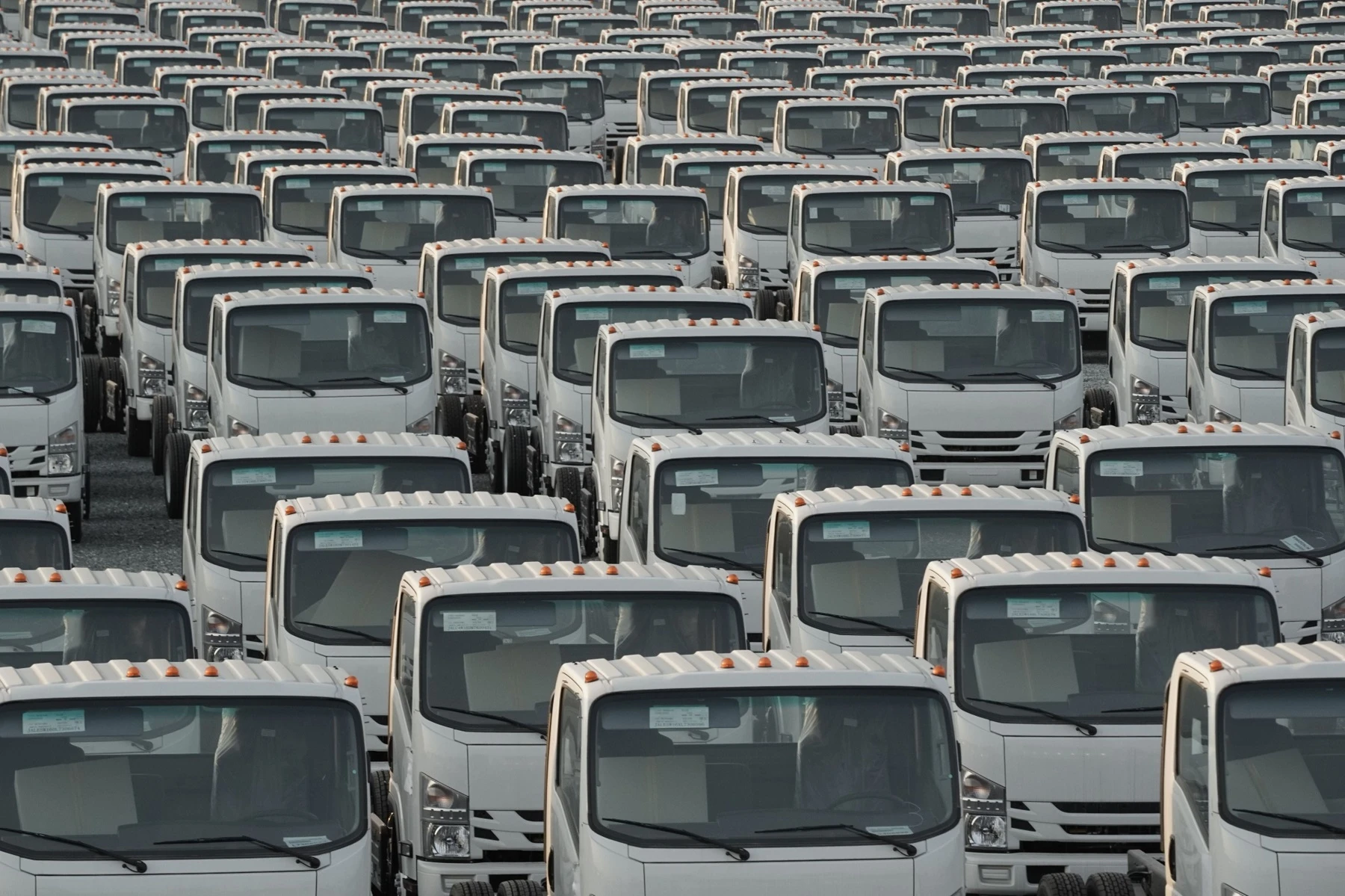
(BloombergNEF) — Trucks are the new growth story in road transport electrification, with far-reaching implications for electricity and battery demand, freight costs and fleet financing. Global sales of medium- and heavy-duty electric trucks reached a record 158,000 vehicles in the first half of 2026 – practically all battery-electric – growing 75% from the same period a year earlier, according to BloombergNEF.
China dominates, but growth is spreading
More than nine out of 10 electric trucks sold globally in the first half of 2026 were in China, supported by strong policies and an extensive battery supply chain. Continuous market growth has pushed electric trucks to about 20% of total truck sales.
China remains by far the world’s largest market, but sales shares are even higher in Norway and Switzerland. Elsewhere in Europe, sales exceeded 10% of total truck volumes in Denmark, the Netherlands and Sweden. Electric trucks accounted for 5.5% of Europe’s total truck sales in the first half of 2026, as manufacturers launched new models and electric truck prices begin to fall.
In contrast, the US battery-electric truck market has slowed to a near standstill, with policy and cost headwinds limiting uptake. Even so, industry participants interviewed by BNEF noted that Tesla’s Semi appears to be priced competitively, at between $250,000 and $300,000 per vehicle. That could already allow it undercut the total cost of ownership of equivalent diesel trucks in some duty cycles, depending on charging costs, according to BNEF calculations.

High-power truck charging expands
Long-haul battery-electric trucking depends on adequate high-power charging infrastructure – essential for quickly topping up large truck batteries. While such stations face cost and grid-connection hurdles, operators continue to build them in Europe, China and the US.
In Europe, truck charging stations are being developed along freight routes and increasingly located beside existing logistics infrastructure, such as highway truck stops. Deployment targets set by the European Union through its Alternative Fuels Infrastructure Regulation (AFIR) are also accelerating construction. However, network growth has yet to eliminate patchy and concentrated coverage across countries and regions where early adopters operate.
The economics of megawatt-scale charging improve as station utilization rises. On top of the cost of electricity, operators would need to charge roughly $0.10 to $0.22 per kilowatt-hour to recover their investment. For now, however, utilization varies widely among stations.
Financiers step up
As the electric truck market grows, incumbent and startup companies are developing new ways to finance and operate fleets. This is also occurring in the US, despite the country’s relatively small electric truck market.
BNEF interviews indicate that financing transactions are increasingly underwritten against the truck’s contracted transport operation, rather than its resale value alone. While these are standard financial instruments, they have been relatively unused in diesel truck financing.
Financiers, fleet owners and shippers are drawn to these instruments to counteract the wide variability in electric truck residual values due to uncertainty around battery degradation. These transactions rely on relatively long-term freight contracts and, in regions with carbon schemes, on the value of emissions reductions. Both features make them attractive to large corporate shippers and major investors.
Nikolas Soulopoulos in London at nsoulopoulos@bloomberg.net
Andrew Logan at alogan59@bloomberg.net