
By Jade Patterson
Ethanol is widely consumed as a road fuel to reduce both emissions and dependency on foreign oil. Ethanol demand is therefore linked with the consumption of conventional road fuels, which in BloombergNEF modeling peaks in 2031 and then falls by around half as electric-vehicle adoption rises. This decline leaves surplus ethanol supply that could instead serve harder-to-abate transport sectors like shipping and aviation.
- Outlook: Ethanol demand in road transport peaks at 2.4 million barrels per day, or 139 billion liters a year, in 2031 in BNEF’s Economic Transition Scenario. It then falls by around 50% by 2050, leaving more than 1.2 million barrels per day (71 billion liters) of ethanol available for other uses.
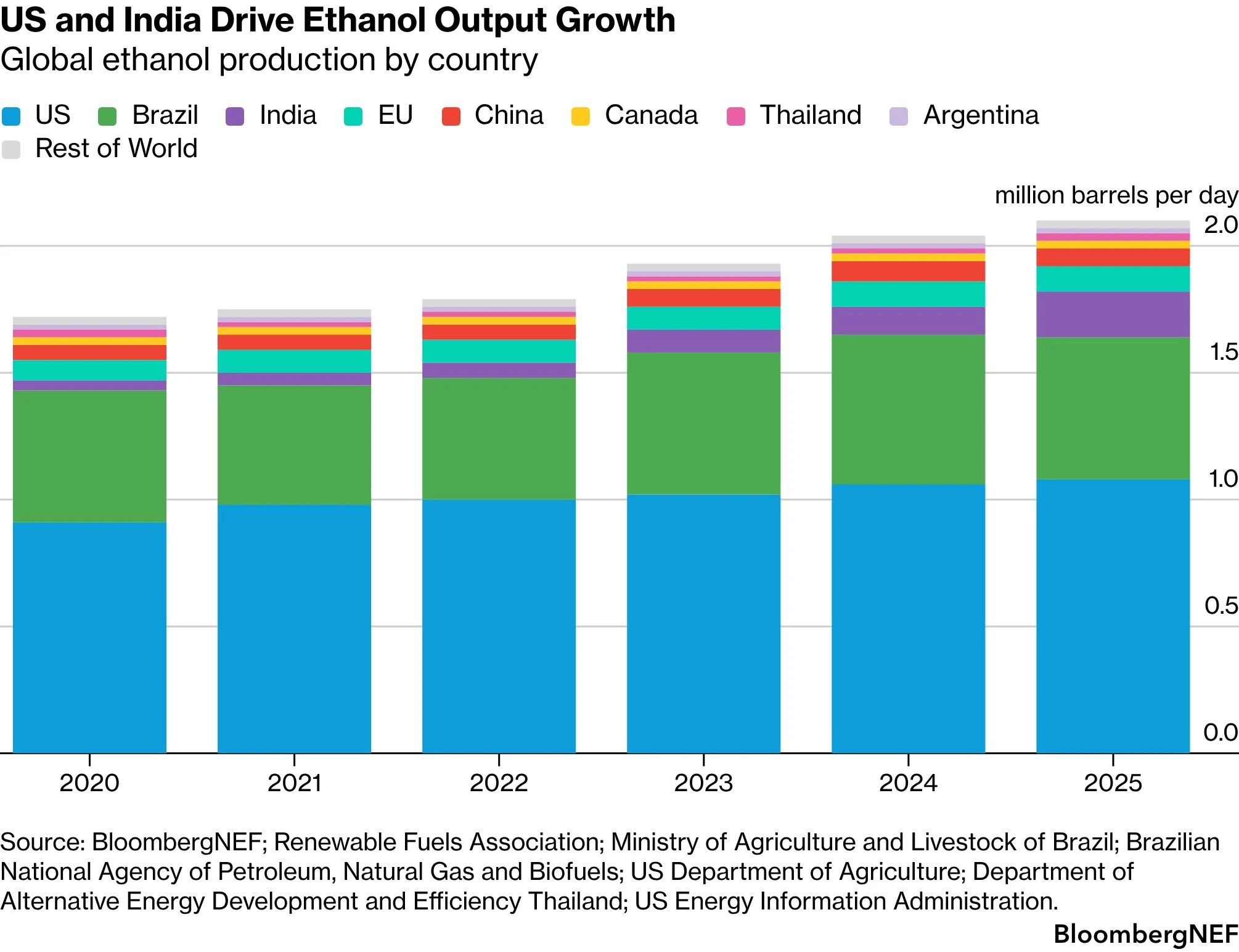
- Supply: The US and Brazil remain the dominant ethanol producers, accounting for 51% and 27% of global production, respectively, in 2025. Almost all US ethanol is produced from corn, while in Brazil sugarcane also plays a significant role.
- Demand: Shipping and aviation could provide alternative sources of demand as road-fuel consumption declines. However, certain demand-side policies, particularly in the EU, restrict crop-based feedstocks, limiting the share of existing ethanol supply that qualifies.
- Trade flows: US ethanol exports have risen over the past three years, reaching 13% of production in 2025. This growth has been supported by efforts from importing markets seeking to reduce transportation emissions and reliance on imported crude oil and refined products.
- Developing markets: India’s market has experienced rapid growth over the past eight years. Ethanol blends rose to 20% in 2025, from 2% in 2017, and the country is now the world’s third-largest ethanol producer.
Related Content