By Victoria Xu, Oil Markets Analyst, BloombergNEF
An oil price rally has been evasive even though the Strait of Hormuz is largely closed and inventories are falling sharply. The oil market is dealing with a temporary supply disruption on top of a structurally bearish backdrop.
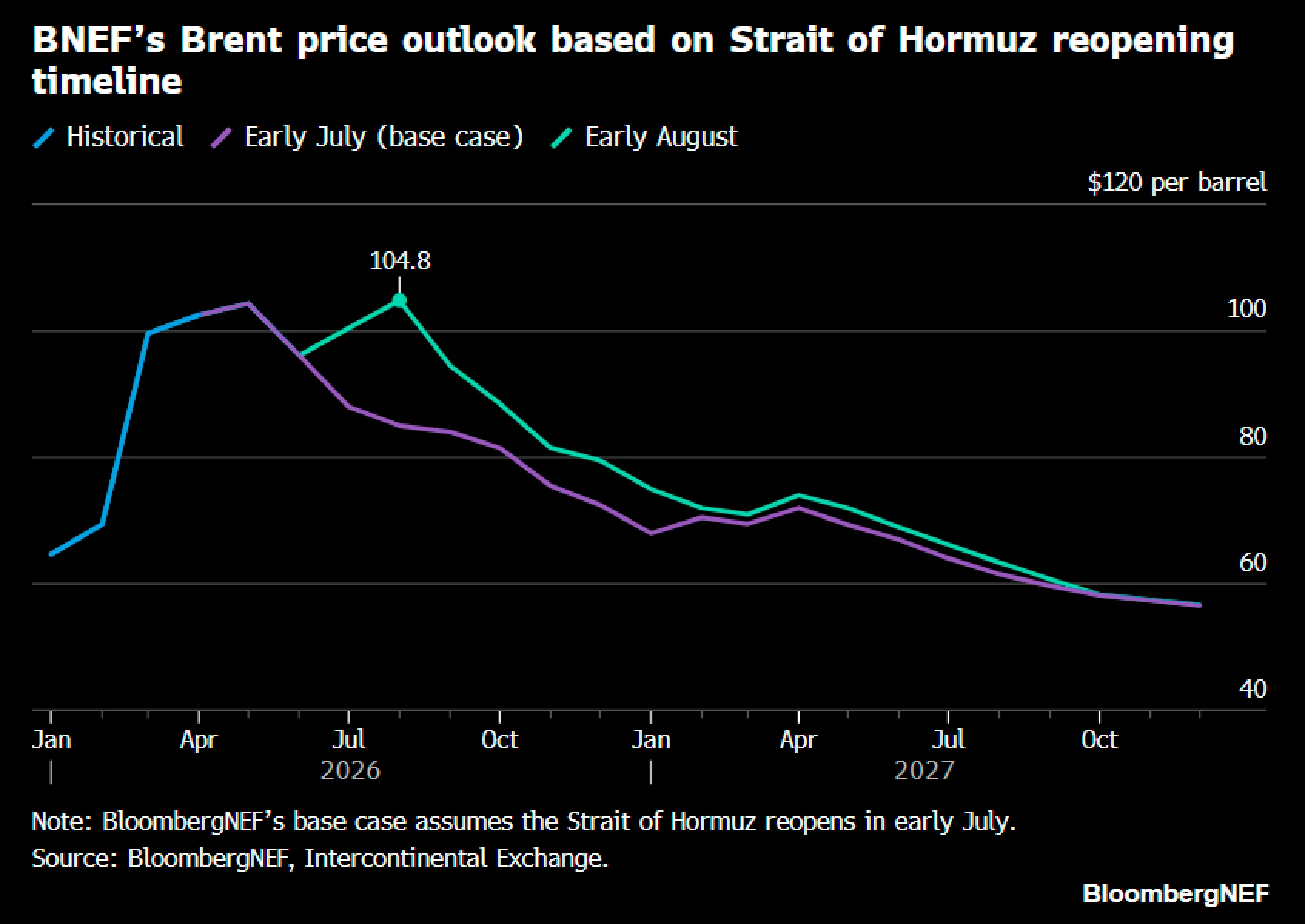
BloombergNEF’s oil price modeling reflects the possibility that Brent futures have already peaked just above $104 per barrel, or are close to peaking, when measured on a monthly average basis. Once the shock effect starts to fade, attention is likely to shift back to slowing demand growth and rising supply.
Three factors support the bearish view.
1. Oil demand growth is fading, and it looks structural
Oil demand is increasingly fragile, and the slowdown appears more structural than cyclical. Efficiency gains continue to reduce fuel intensity. Jet fuel demand remains below 2019 levels despite rising air traffic. Electric vehicles are taking a bigger bite out of gasoline demand. Internal combustion engine car sales in China fell 21% year-on-year in April, and the country’s gasoline demand appears to have peaked in 2023.
The demand drop is more significant for petrochemical feedstocks and cooking fuels, roughly peaking at 2.5 million barrels per day. Additional downside from price-driven demand destruction in transportation fuels may balance the market faster or at least slow the pace of inventory drawdowns. The conflict could keep demand growth weaker for longer, though the scale of the impact remains uncertain.
2. China’s stockpiles are quietly capping the upside
China has sharply trimmed its crude imports, reflecting both softening domestic demand and opportunistic stockpiling over the past several years, when sentiment and prices were low. This buying helped put a floor in the oil market by soaking up excess barrels and preventing a further price slide last year.
Today, those stockpiles work in the other direction, limiting the scope of the price rally beyond $120 per barrel. China has far less need to chase cargoes when prices climb with its storage tanks well supplied. Chinese inventories have inadvertently became a significant price-stabilizing force, capping the market on the way up just as they cushion it on the way down.
3. Supply is growing fast outside the Middle East
While demand softens, supply keeps expanding. Supply growth outside OPEC+ remains robust, especially in the Americas. BloombergNEF estimates that the supply growth in the region has exceeded 1 million barrels a day in recent years and will remain a major source of incremental supply through 2027.
A large cushion of Middle East supply is also waiting to return. BloombergNEF estimates that 80% to 90% of the production lost to the conflict can come back by the end of the year if the Strait of Hormuz reopens by early August. The recovery will be uneven, and some volumes, particularly in Qatar, could take years. On top of that, the UAE can tap more than 1 million barrels a day of spare capacity, adding further pressure. Iranian oil could also return under a deal to reopen the Strait of Hormuz.
As Middle East barrels come back on top of rapidly growing supply elsewhere, the market could swing from a deficit this year into a sizable surplus next year.
Counter view
BloombergNEF expects oil prices to remain near current levels through August, assuming the truce holds and both parties keep working toward a deal to reopen the Strait of Hormuz. If the Strait stays closed well beyond the summer, or fresh strikes damage energy infrastructure, prices would be pushed sharply higher and governments could be forced into more measures to curb demand.
Related Content