Asia Pacific markets outside of China represent the fastest-growing region for energy transition investment. However, capital flows to low-carbon energy supply have not outpaced investment in local fossil-fuel supply, and is dwarfed by fossil-fuel import expenditures. Banks from the region have also struggled to scale low-carbon transactions relative to fossil-fuel deals, reflecting inertia in the real economy and established financing strategies. Major energy shocks in 2026 have again highlighted the risks that fossil fuel dependency poses to global economies.
BloombergNEF’s new report, Energy Supply Ratios for Investment and Financing in Asia, looks at how investment and financing have evolved in eight Asia Pacific economies. It finds that banks headquartered in Japan, South Korea, Taiwan, Singapore, Malaysia, Thailand, Indonesia and the Philippines facilitated 83 cents in clean energy supply for every dollar of fossil-fuel financing in 2024. Despite rising to the highest level since 2021, it remained below the global ratio of 0.89:1.
Financing ratio calculations and disclosure, already adopted by institutions including JPMorgan Chase, Citigroup and Scotiabank, can provide visibility to investors and serve as a valuable internal benchmarking and strategic tool.
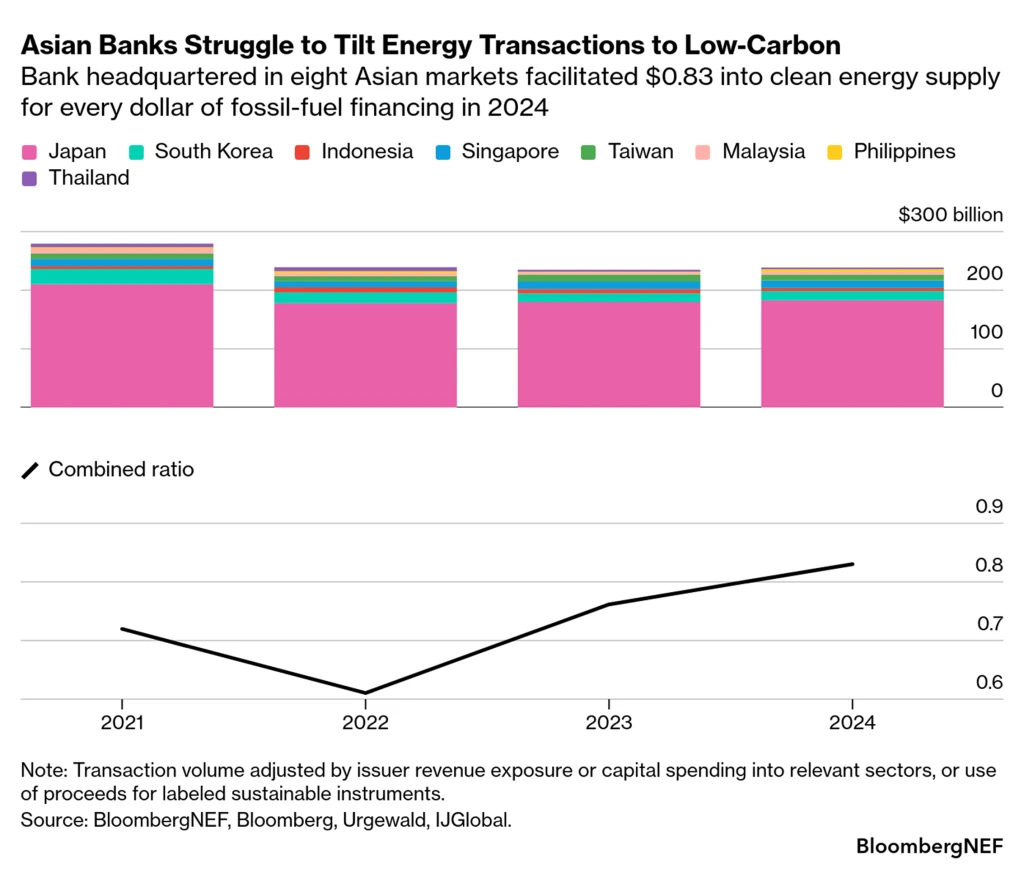
Fossil-fuel financing declines gradually while low-carbon transactions rise marginally
Banks across these markets facilitated around $240 billion in energy supply financing annually between 2022 and 2024. Fossil-fuel financing volumes declined gradually across these banks. Low-carbon volumes rose only marginally. Total low-carbon transactions in 2024 remained below 2021 levels and fossil-fuel energy supply volumes.
Ratios between low-carbon and fossil-fuel energy supply volumes improved in 2023 and 2024 for banks from Japan, Taiwan, Malaysia, Thailand and the Philippines when aggregated by market.
Institutions that increased their ratios in 2023 and 2024 include Japan’s MUFG and Mizuho, Taiwan’s Mega Financial Holding, Indonesia’s Bank Mandiri, Malaysia’s Maybank, and Thailand’s Krung Thai Bank and Kasikornbank. Standard Chartered, BNP Paribas, Groupe BPCE and Deutsche Bank are leading banks from outside Asia Pacific that facilitated energy supply financing to the Southeast Asian markets covered in this report.
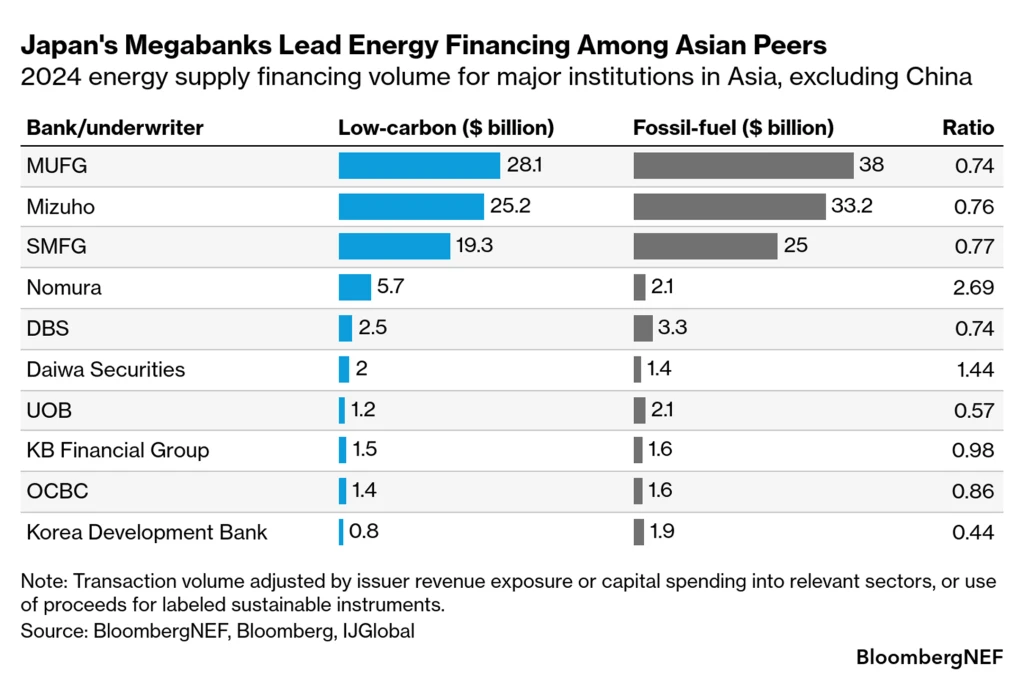
Power grid and energy storage drove low-carbon financing growth
Across low-carbon sectors, bank financing to wind and solar remained broadly flat between 2023 and 2024. Power grid and energy storage drove financing growth in 2024 for banks in most markets.
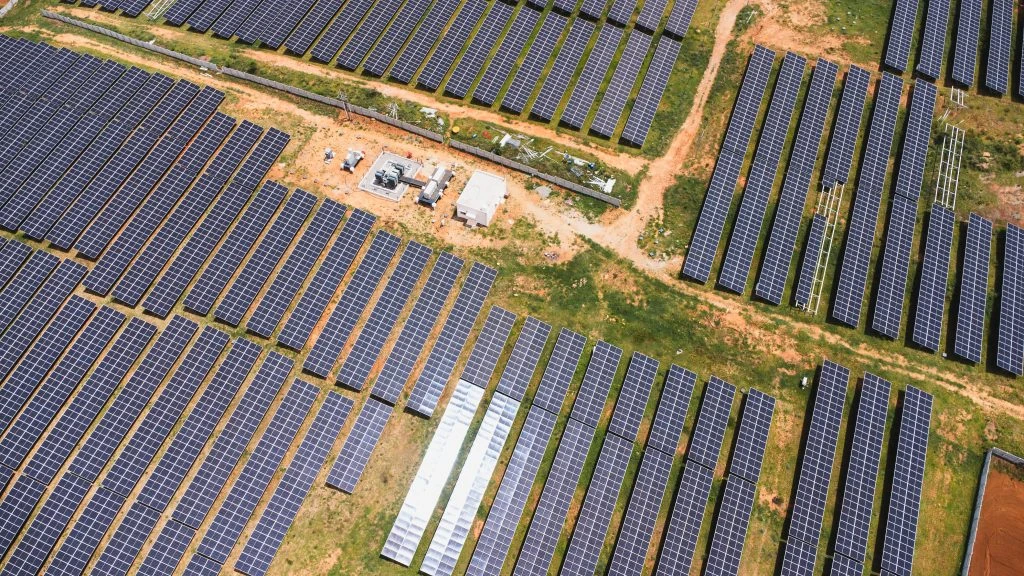
Large deals or issuers can swing results. Financing of the largest solar and battery project in Southeast Asia drove low-carbon volumes for banks in the Philippines. Banks in both Thailand and Indonesia saw fossil-fuel transactions decline, as PTT and Pertamina had limited refinancing needs.
Domestic transactions tilted toward low-carbon activities for banks in five of the eight markets in 2023-2024, highlighting growing transition opportunities. Banks from Japan, for example, achieved a ratio of 1.27:1 domestically, but this was offset by fossil-fuel deals in North America and Southeast Asia.
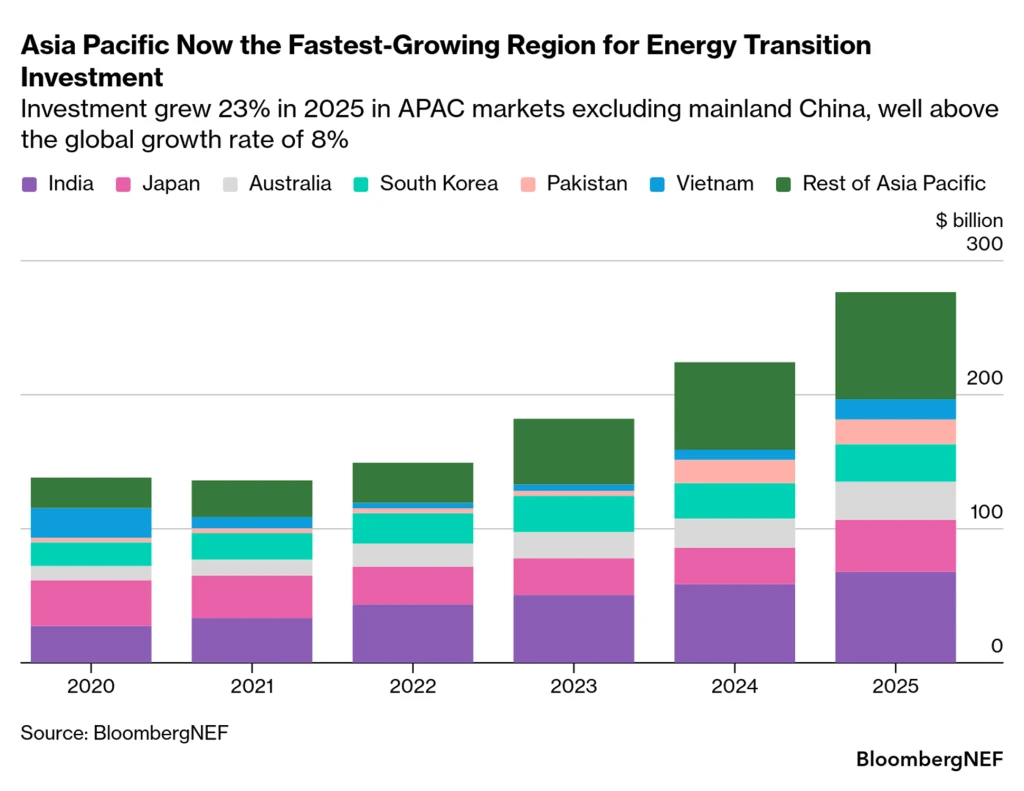
Energy transition investment accelerates in Asia Pacific
Energy transition investment grew 23% in 2025 in Asia Pacific markets excluding mainland China, well above the global growth rate of 8%. Yet the investment ratio remained at just $1.3 in low-carbon energy supply for every dollar invested in fossil-fuel supply in 2025, still lagging behind Europe’s 3.5:1. This comparison excludes spending on fossil-fuel imports. South Korea, for example, invested only 11 cents in local clean energy supply for every dollar spent on fossil-fuel imports.
Globally, a 4:1 investment ratio between low-carbon and fossil-fuel energy supply is required on average across this decade to align with 1.5-degree warming scenarios relative to pre-industrial levels. Asia Pacific needs a higher ratio to offset structurally lower investment in fossil fuel-producing markets.
Download report
The report will be sent to your email after completing the form.
Related Content